How to Forgive Yourself for Past Mistakes: What It Actually Requires

How To Forgive Yourself For Past Mistakes

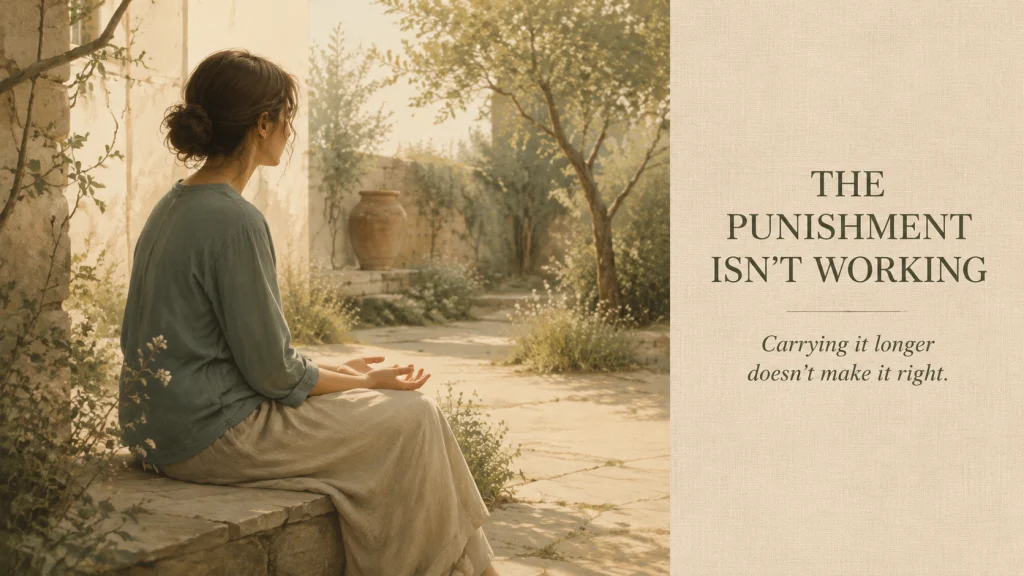
Self-forgiveness for past mistakes is not a decision you make once, and it is not a moment of resolution that, once reached, holds. It is closer to a practice: the repeated choice not to resume the habit of self-condemnation when a memory of what you did surfaces again. What it requires is specific — acknowledgment

Forgiving Yourself: Why It’s So Hard and What It Actually Means

Forgiving Yourself

Self-forgiveness is not the same as excusing yourself. It does not require pretending something did not happen, or that what happened was acceptable. What it requires is taking genuine responsibility, making amends where that is possible, and then releasing the ongoing punishment without waiting for the punishment to feel proportionate. For most people, that last

Is It Too Late to Change What You Regret?

Is It Too Late To Change What You Regret

The question of whether it is too late to act on a regret is almost always asked too early. The assumption of closure (that the window has passed, that the relationship is over, that the path is gone) tends to arrive well before it has actually been tested. Sometimes the window has closed. Sometimes it

How to Use Regret Productively Without Being Consumed by It

How To Use Regret Productively

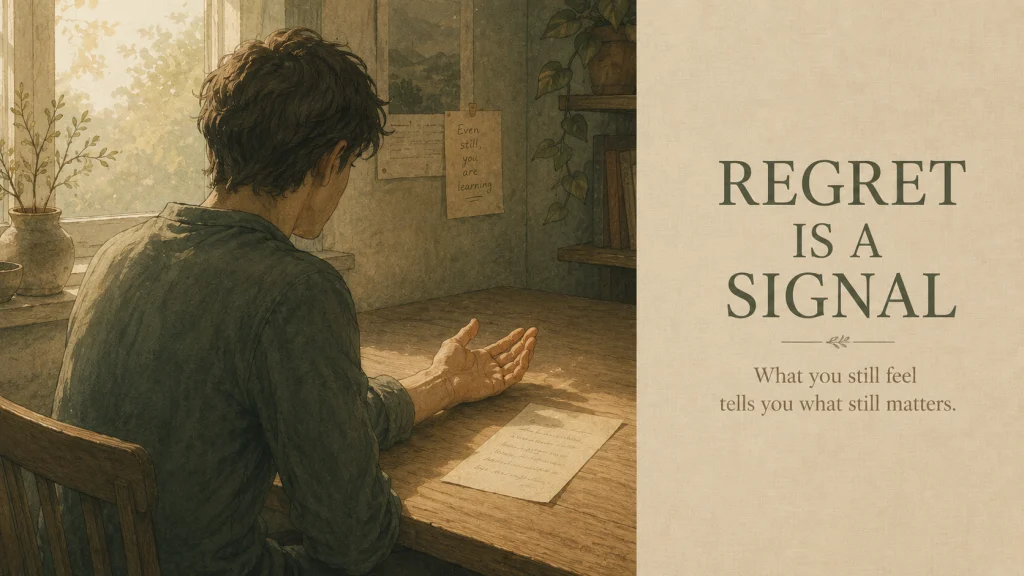
The standard advice about regret offers two options: suppress it, or let it drive you to immediate action. Neither captures what regret is actually for. Research on the subject suggests regret carries two pieces of information worth reading: a signal about what you value highly enough to feel its absence, and a cue about what

Why Not Doing Something Hurts Longer Than Doing Something Wrong

Why Inaction Causes More Regret Than Action

The things people regret most are almost never the things they did badly. They are the things they never did at all. Research on regret has documented a consistent pattern: in the short term, a recent mistake tends to sting more than a missed opportunity. But over longer stretches of time, the pattern reverses, and

Why We Always Seem to Learn Some Lessons Too Late

Why We Always Learn Some Lessons Too Late

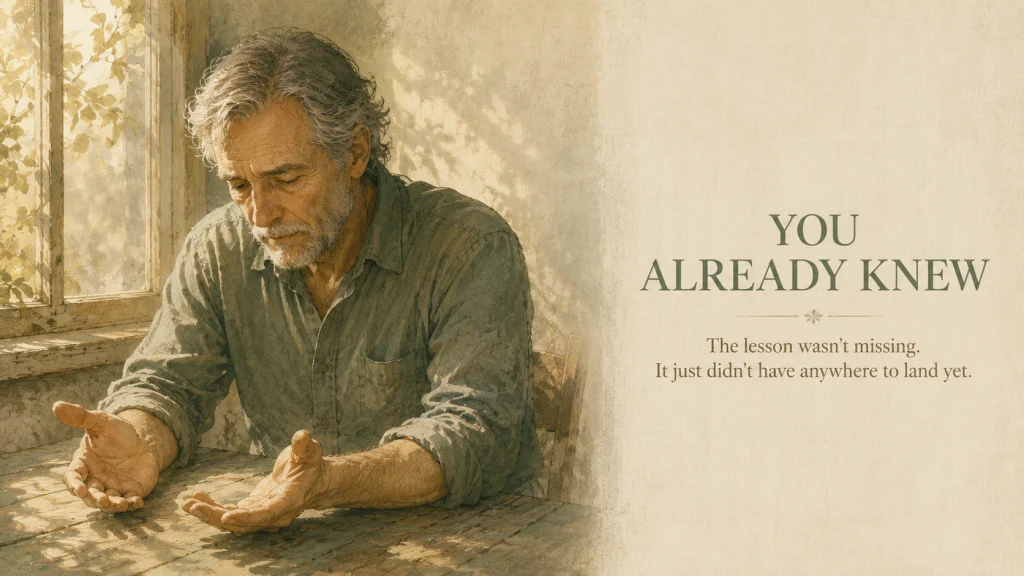
The feeling of having learned something too late is one of the most persistent things I encountered across two decades in hospice work. It almost never turns out to be what it appears to be on the surface. The mechanism behind it is not a failure to encounter the right wisdom early enough. It is

What Are the Most Common Regrets People Have? (And Why They Cluster Around the Same Things)

What Are The Most Common Regrets People Have

The most common regrets people report, whether gathered from hospice bedsides or from large-scale surveys of the general population, tend to cluster around the same few themes. Bronnie Ware documented five of them from her years in palliative care. Daniel Pink’s research across a much wider population confirmed the clustering and added one finding that

Lessons Learned Too Late: What Regret Teaches and How to Work With It

Regrets In Life Life Lessons Regret What People Regret Most

Most of what gets written about regret either turns it into a warning, live without regrets, or tells you to let it go and move on. Neither of those does much with what regret is actually telling you. This piece looks at lessons learned too late as a recognizable pattern in how people experience their

How to Find Purpose When Starting Over

How To Find Purpose When Starting Over

Most people who start over solve the practical part faster than they expect: a new job, a new routine, a new place to live. What takes longer is the part nobody warns them about, which is the absence of anything that feels like it matters. This piece walks through why purpose doesn’t return the way

What to Do When Everything Still Feels Wrong After Starting Over

What To Do When Everything Feels Wrong After Starting Over

Making a major change and still feeling unsteady, lost, or wrong in the aftermath is one of the most disorienting experiences people describe, partly because so little prepares them for it. Starting over changes external circumstances first. The emotional interior catches up later, on a slower and less predictable schedule. What I saw across two

How to Rebuild Your Identity After Loss

How To Rebuild Your Identity After Loss

When a major life role ends, a marriage, a career, a long-held purpose, the loss is not only of the thing itself. It is of the daily structure that told you who you were. Most people going through this expect to grieve what they lost. Fewer expect to feel genuinely uncertain about who they are

Starting Over at 40 or 50: What Changes, What Doesn’t, and What Gets Easier

Starting Over At 40 Or 50

Starting over at 40 or 50 is not simply a harder version of starting over at 25. The person in midlife brings different raw material into a new beginning: more self-knowledge, less patience for directions that were never really theirs, and a clearer sense of what they are starting and why. That self-knowledge complicates a