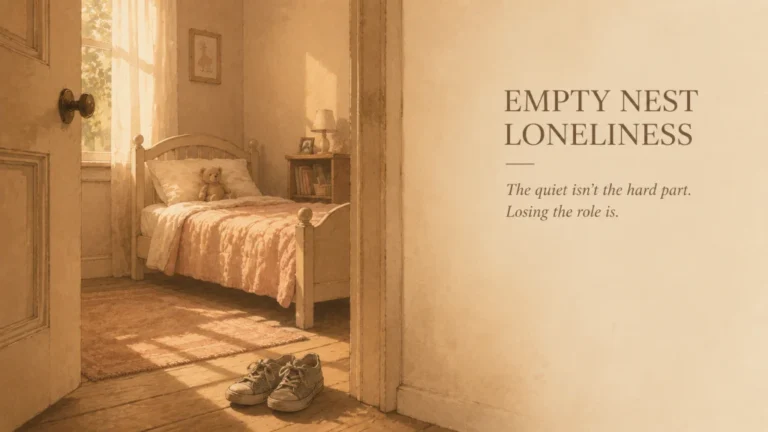
Lonely in a relationship is a specific kind of loneliness, the kind that shows up with someone right there beside you. It rarely arrives as a single dramatic rupture. More often it builds from an ordinary, almost invisible pattern: small things quietly judged not worth bringing up, night after night, until the distance between two people becomes the new normal without either of them choosing it. This piece looks at how that drift happens and what it tends to look like from the inside.
The Loneliest People in the Room Sometimes Had Someone Beside Them
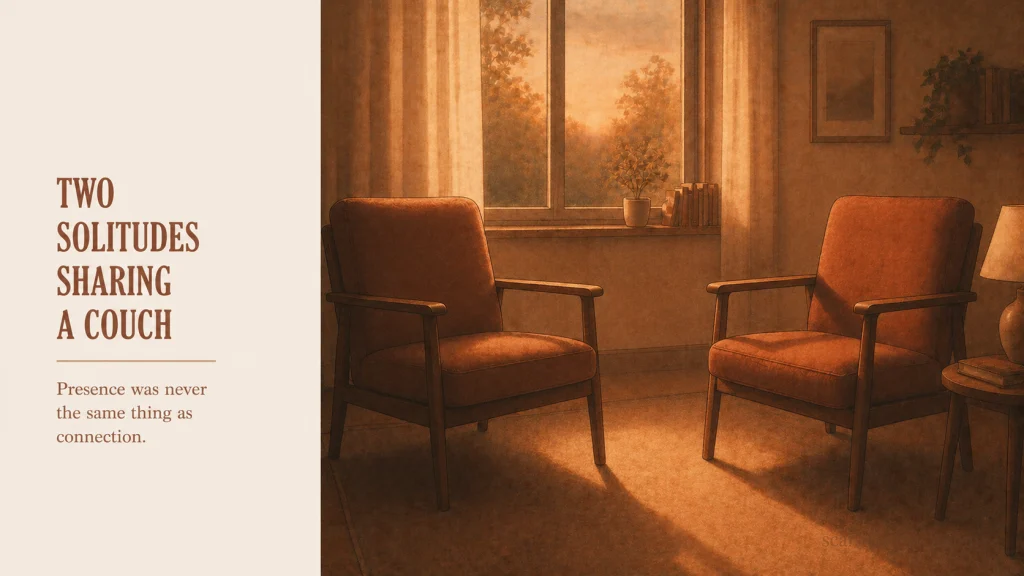
Some of the loneliest people I sat with at a bedside were not the ones without family nearby. They were the ones whose spouse of forty years had been sitting in the chair beside them the entire time, present in every visible sense, and still somehow out of reach. Physical closeness, even decades of it, turned out to guarantee nothing about whether two people actually felt close.
If you are lonely in a relationship right now, that observation probably does not surprise you. You already know presence is not the same as connection. What is harder to see from inside it is how the distance got there in the first place, since it rarely announces itself the way a single fight or betrayal would.
How Ordinary the Drift Actually Is
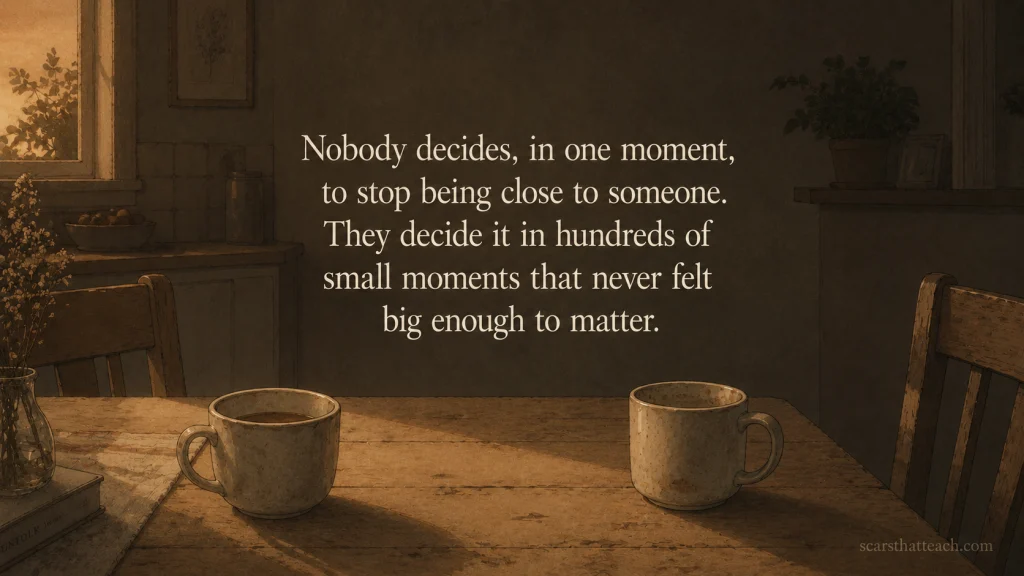
The standard explanation for relationship loneliness tends to focus on unmet emotional needs and shallow daily conversation, and research on couples, including the well known work on partners turning toward or away from each other in small daily moments, backs that up. What gets less attention is how undramatic the actual onset usually is. It is not one identifiable problem with one conversation that fixes it. It is closer to two people quietly deciding, night after night, that some small thing is not worth bringing up.
A minor frustration goes unmentioned because raising it seems like more trouble than it is worth. A passing thought about your day goes unshared because the other person looks tired, or distracted, or simply because the moment passes before you say anything. None of those choices feels significant on its own. Repeated enough times, though, that pattern becomes the relationship’s actual texture, and the distance becomes the baseline neither person consciously agreed to.
Nobody decides, in one moment, to stop being close to someone. They decide it in hundreds of small silences that never felt significant enough to break.
What This Tends to Look Like From the Inside
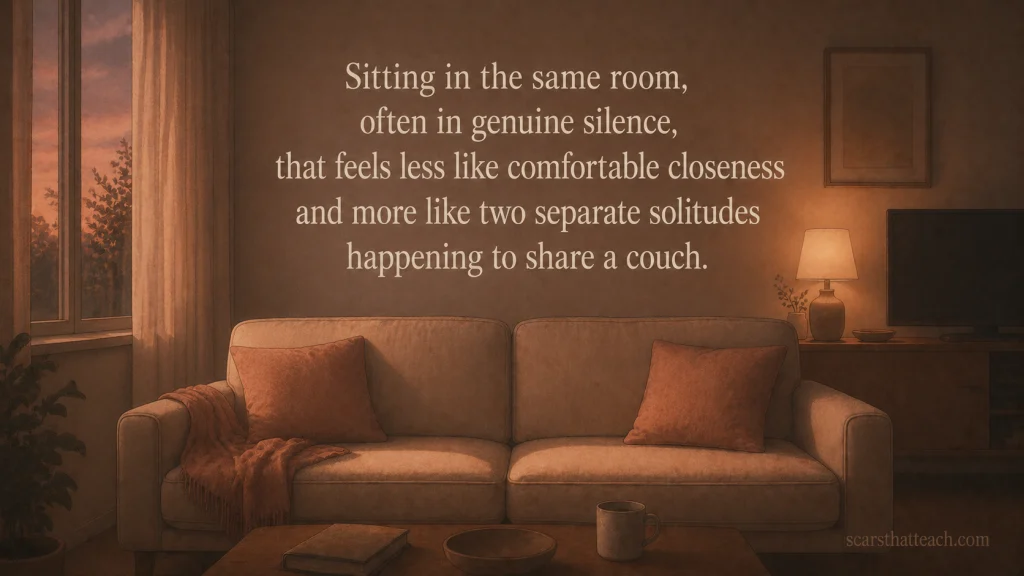
People living this rarely describe a single grievance they could point to. What they describe instead is a kind of low-grade absence. Conversations that stay on logistics, schedules, errands, what needs doing around the house, without ever drifting into anything that reveals what either person is actually thinking or feeling that week. Sitting in the same room, often in genuine silence, that feels less like comfortable closeness and more like two separate solitudes happening to share a couch.
What I noticed, in couples who eventually named this out loud, was how often each partner privately blamed themselves for the distance, certain that the other person had simply stopped caring, while the other partner was quietly carrying the identical fear in reverse. The drift rarely comes from one person checking out. It usually comes from both people slowly, separately, deciding that the small things were not worth the risk of bringing up, which is a very different process from relationships that cost more than they give, where the harm tends to be active rather than simply unspoken.
What People Commonly Get Wrong About This Kind of Loneliness
The most common mistake is waiting for the loneliness to resolve on its own once life calms down, once the demanding season at work ends, once the kids are a little older. The drift that built the distance was never really about busyness. It was about hundreds of small choices to stay quiet, and a calmer schedule does not automatically undo a pattern that formed one unspoken moment at a time.
The second mistake is assuming the loneliness means something has gone fundamentally wrong with the relationship itself, rather than with the pattern the two people fell into inside it. Those are not always the same thing. The different shape loneliness takes without a partner at all can be useful to read alongside this, if only to see how distinct relationship loneliness actually is from the absence of one.
- Most of your conversations stay on logistics rather than anything either of you is actually thinking about.
- You have stopped mentioning small things because raising them feels like more effort than it is worth.
- You sit together often, but the silence feels more like distance than comfort.
- You privately assume your partner has simply stopped caring, without ever saying that out loud.
- You cannot point to one specific fight or moment that explains how the distance got here.
Final Thoughts: Naming the Drift Is Not the Same as Deciding What to Do About It
Recognizing this pattern does not tell you whether to stay, leave, or fight for something different. That decision belongs to you and depends on far more than any general pattern can capture. What naming it does is replace a vague, hard-to-explain ache with something more specific: not a verdict on the relationship as a whole, but a description of a pattern that built up gradually and, in many cases, can be addressed the same way it formed, in small deliberate moments rather than one dramatic conversation. For couples who want outside support working through this, couples counseling is one option worth considering, not a required next step. A wider look at the different shapes loneliness can take covers related situations beyond this one specifically.
FAQs
🛋️ Why do I feel lonely even though my partner is right here?
Physical closeness does not guarantee emotional connection. This kind of loneliness often comes from a slow, undramatic pattern of small things going unmentioned, rather than from one identifiable problem.
🌫️ How does a relationship drift into this kind of distance?
Usually through hundreds of small moments, a frustration not raised, a thought not shared, repeated night after night, until the distance becomes the relationship’s baseline without either person choosing it.
🤝 Does this mean the relationship is broken?
Not necessarily. It often reflects a pattern the two people fell into rather than something fundamentally wrong with the relationship itself, though that distinction is something only you can assess for your situation.
🗣️ Should I bring this up with my partner?
That is a personal decision this piece will not make for you. What is worth knowing is that the pattern usually formed through silence, and naming it out loud is often where addressing it begins.
🧑⚕️ Is couples counseling necessary for this?
Not necessarily, but it is a reasonable option for couples who want outside support working through the pattern. It is worth considering, not something every relationship in this situation requires.