Heartbreak from being dumped carries a specific weight that grief alone does not explain: you did not get a vote in something that reshaped your entire life. Most advice on this kind of breakup focuses on removing self-blame, which matters, but it rarely names the separate injury underneath it, the asymmetry itself, the fact that one person decided and the other had to live with it. This piece sits with that particular pain directly, alongside the more familiar grief of losing the relationship, without promising that understanding it will make it hurt less right away.
Heartbreak From Being Dumped Is Its Own Kind of Injury
I noticed something across the years I sat with people working through the end of a relationship. The ones who said some version of “I wasn’t ready for this to end” carried a different weight in the room than the ones who had seen it coming, who had time to grieve while the relationship was still technically intact. It was not that their loss was bigger. It was that they were carrying two things at once, the loss itself and the fact that they never had a say in it, and most people around them only ever addressed the first one.
Being broken up with against your own wishes is not the same experience as a parting both people saw coming or agreed to. The relationship ending is one injury. Not having been asked, not having had any real vote in a decision that reshaped your entire life, is a second one sitting right alongside it, and most of what gets said to someone in this position only ever reaches the first.
What the Usual Advice Gets Right
The standard guidance for getting dumped heartbreak is not wrong, and it is worth saying plainly before going further. Rejection from a breakup is its own grief, separate from the loss of the relationship itself, and it deserves to be treated that way instead of folded into general sadness. Most of what a person needs to hear in the early weeks is some version of this: the ending being non-mutual does not mean you did something to deserve it, and the urge to comb back through everything you said and did, looking for the moment you caused this, usually leads somewhere unfair rather than somewhere true.
That reassurance matters. Self-blame after being broken up with tends to arrive fast and stay stubborn, filling in an explanation where the real one was never fully given. Resisting it is genuinely useful work, and most of the confirmed guidance on this kind of heartbreak spends its time there for good reason. But reassurance about fault is not the same thing as naming what actually happened to you, and that gap is where a lot of people get stuck longer than they expect to.
The Injury Most Advice Never Names
Most of what gets written about being dumped stops at removing blame and moves on, as though once you know it was not your fault, the rest should settle on its own. It rarely sits with the asymmetry itself: one person made a decision, and the other person’s entire life changed because of it, without a vote, without a say, sometimes without even a real conversation about it beforehand. That imbalance is not about who was right or wrong. It is its own separate thing to grieve, independent of the reasons behind the ending.
You can fully believe the breakup was not your fault and still be furious, or flattened, by the fact that you did not get to weigh in on something this large. Both feelings can be true at once. The unfairness of not having a vote does not require the other person to have done anything wrong. Someone can end a relationship for entirely understandable reasons and it can still be true that the person on the receiving end never had a say in the timing, the ending, or whether it happened at all. Naming that asymmetry is not the same as assigning blame. It is just telling the truth about what the experience actually was.
- A frustration that has nothing to do with wanting the relationship back, only with wanting to have been part of the decision.
- A sense of your life being rearranged by someone else’s timeline, on someone else’s terms, without your input anywhere in the process.
- Grief that keeps circling back to the ending itself, the way it happened, more than to the relationship that was lost.
- A specific kind of restlessness that “it wasn’t your fault” does nothing to settle, because fault was never really the thing bothering you.
A Pattern I Saw Often Enough to Name It
There is a pattern I noticed often enough across very different people to stop treating it as coincidence. The ones who kept returning, session after session, to the specific moment they were told it was over, replaying the words, the setting, how little warning they had, were rarely still trying to figure out what they did wrong. What they were actually circling was the fact that the decision had been made entirely without them, somewhere out of view, before they ever knew there was a decision to be made.
A man I spoke with once had been in a long relationship that ended with a single conversation he did not see coming. He spent weeks assuming his hurt was about losing her. Eventually he said something that stuck with me: the thing keeping him up at night was not the relationship ending. It was that she had apparently been deciding this for months, living inside a choice he had no idea was even being weighed, while he had gone on assuming they were building something together. That is a distinct wound. It has almost nothing to do with whether the relationship should have ended.
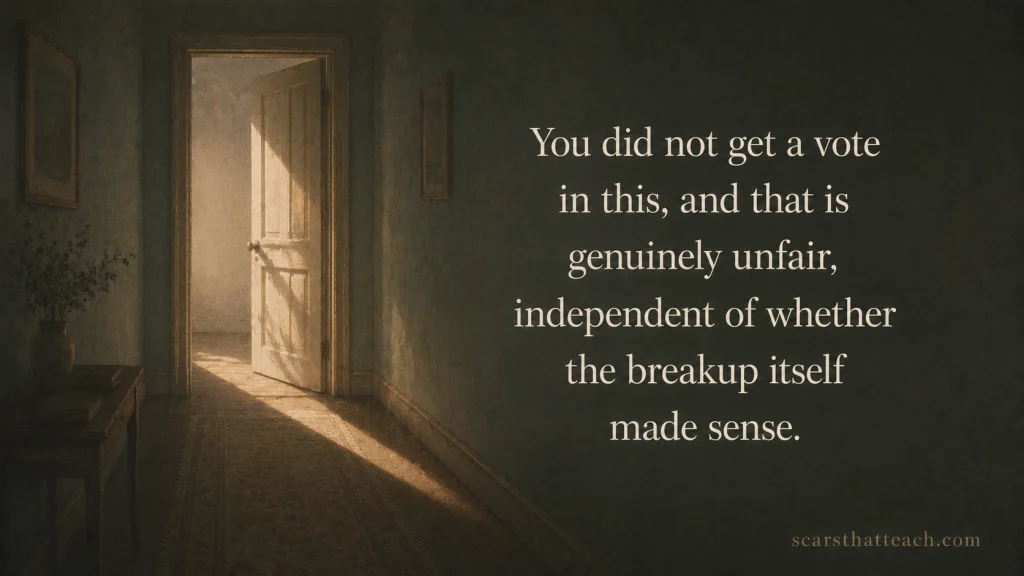
What people commonly get wrong when they try to comfort someone in this position is reaching straight for reassurance about fault, since that is the easiest and kindest-sounding thing to offer. It is not always what is actually needed. Sometimes the more honest thing to say is simpler: you did not get a vote in this, and that is genuinely unfair, independent of whether the breakup itself made sense.
Final Thoughts: Both Injuries Deserve Their Own Grief
Heartbreak from being dumped is not one loss wearing two faces. It is two losses that happen to arrive at the same time, the relationship itself, and the fact that you never had a say in ending it. Grieving the first without acknowledging the second tends to leave something unfinished, a restlessness that reassurance about fault was never going to reach, because fault was never really what it was about.
I am not in a position to tell you how long either grief should take, or whether the specific circumstances of your ending call for something different than what is described here. If the relationship ended through a betrayal rather than simply not being mutual, that carries its own particular weight, covered more directly in the specific pain of being cheated on. And if what you are actually facing is a parting that both of you saw coming and mostly agreed on, the experience described here will not fully match yours, something explored further in ending a relationship you still love. For the wider picture on moving through heartbreak in general, there is more at what heartbreak actually teaches over time, and for verified reflections on people who reshaped your life without your consent, there is a collection of verified quotes on toxic people and hard relationships worth sitting with.
FAQs
💔 Why does being dumped hurt more than a mutual breakup?
Because it carries a second injury alongside the loss itself: you did not get a say in the decision. That asymmetry is its own thing to grieve, separate from the relationship ending.
🌀 Is it normal to still feel angry even if I know it wasn’t my fault?
Yes. Knowing you are not to blame does not erase the unfairness of not having had a vote in something that reshaped your life. Both feelings can be true at the same time.
🧭 How do I stop replaying the moment I found out it was over?
Often that replaying is less about the relationship and more about the decision having been made without you. Naming that specifically, rather than only reassuring yourself it wasn’t your fault, tends to help more.
🤝 What should I say to a friend who just got dumped?
Reassurance about fault helps, but it is not always the whole thing they need. Acknowledging that they did not get a vote in something this large, and that this is genuinely unfair on its own, can matter just as much.
⏳ How long does this specific kind of grief usually take?
There is no fixed timeline, and it depends on the person and the relationship. What tends to help is grieving the loss and the asymmetry as two separate things instead of expecting one kind of healing to cover both.