Empty nest loneliness is not really about missing the noise, the laundry, or the school pickups, even though that is usually how people describe it at first. Underneath it is something closer to standing at the edge of a life you no longer have a script for. This is about why empty nest syndrome hits harder and lasts longer than the hobbies-and-socializing advice suggests, how long that disorientation actually tends to last, and what slowly starts to take the old role’s place once you stop waiting for the feeling to simply be finished.
The Quiet Nobody Prepares You For
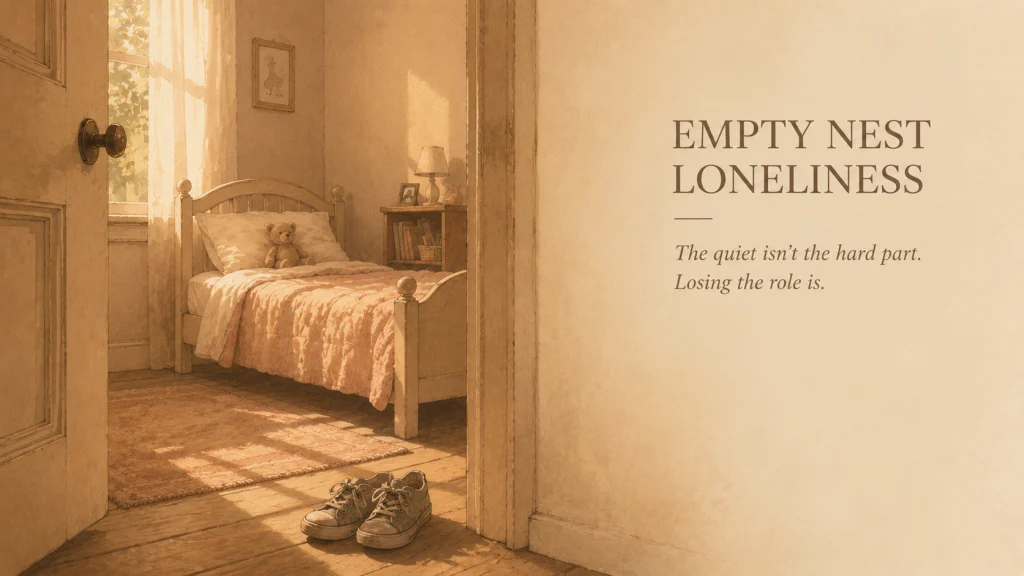
A woman once told me the house had been loud for twenty-two years. Every morning of it, someone needed something, wanted something, forgot something on the way out the door. She had complained about that noise plenty of times over the years, the way anyone would. What she had never once imagined, she said, was what the quiet was actually going to sound like once it arrived. That is where empty nest loneliness usually starts, not in some abstract sense of aging or change, but in a specific, physical silence in rooms that used to be full.
Most people expect to miss their kids when they leave. Almost nobody expects the hours themselves to feel unfamiliar, the way a whole evening can stretch out shapeless once the routine that used to organize it is simply gone. That part is the harder one, and it is the part that most advice on this topic skips past entirely.
A Grief With a Shape, Not a Flaw
What parents feel when children move out for college, work, or independence is a recognized experience, not a personal failing or a sign of being overly attached. It tends to move through a rough shape rather than a straight line: an early stretch of real sadness and disorientation, a middle stretch where relief starts to show up alongside the grief, sometimes to the parent’s own surprise, and eventually a stretch where something closer to genuine enjoyment of the new quiet becomes possible. None of those stages arrive on a schedule, and plenty of parents move backward through them before moving forward again.
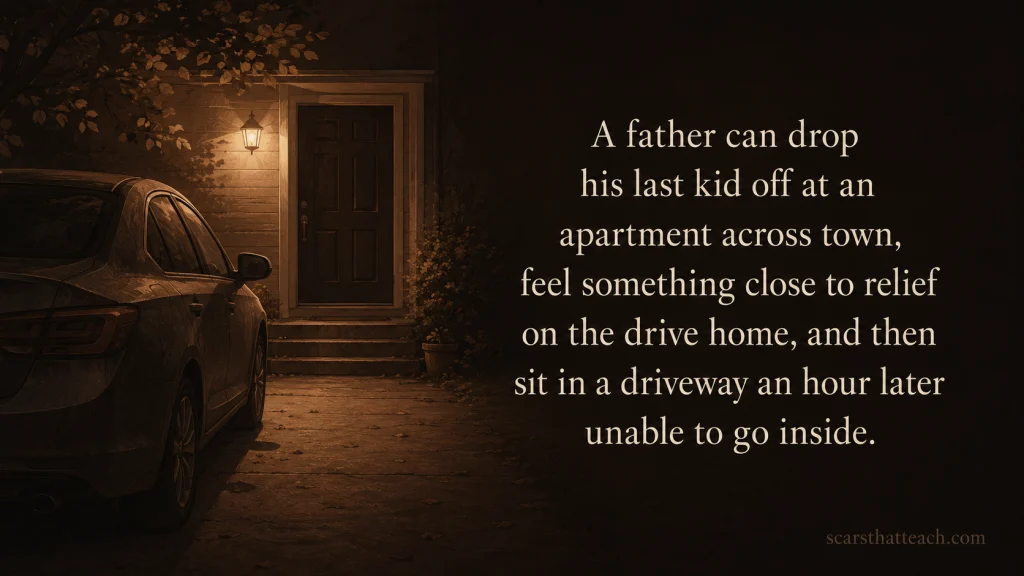
What tends to get lost in how this is usually described is that all three of those stages can be true within the same week, sometimes the same day. A father can drop his last kid off at an apartment across town, feel something close to relief on the drive home, and then sit in a driveway an hour later unable to go inside because the house is going to be too quiet. Neither reaction cancels the other out. Both are part of the same grief, moving through its actual shape instead of the tidy, linear version people expect of themselves.
What the Hobbies Advice Gets Wrong
Nearly everything written about this treats it as a scheduling problem. Find a hobby. Join a group. Reconnect with your partner. Some of that advice is not wrong, exactly, and a fuller calendar does help some people some of the time. But it treats the loss as though it were mostly about empty hours, when for most parents the actual loss is an empty identity, at least for a while. Parenting, for eighteen or more years, was the clearest and most demanding role most people ever held. It told you what to do with your days, what mattered, who needed you. When that role ends, or shrinks down to occasional phone calls, filling the hours does not automatically answer the harder question of who you are now that the job is done.
I think the honest thing to say here is that parenting was never supposed to last forever. That was the whole design of it. You spend two decades building someone capable of leaving, and if you did it well, they leave. Knowing that intellectually does very little to make the actual quiet easier to sit in. The grief is not a sign you did something wrong, or that you built your life around your children in some unhealthy way. It is a sign that the role was real, and real roles leave a real gap when they end, even the ones that were always designed to end.
What Comes After the Empty Feeling
Knowing that the loss is real does not tell you what to do with the space it leaves behind, and most parents want an answer to that part more than they want another explanation of the grief itself. The honest answer is that a new sense of who you are does not arrive all at once. It builds the same way the old one did: slowly, through repetition, mostly without you noticing it happening. The old identity was not built in a single decision to become a parent. It was built through eighteen years of showing up for the same small tasks until they became who you were. Whatever comes next gets built the same unglamorous way, one repeated Tuesday at a time, not through a single moment of clarity where you suddenly feel like yourself again.
The timeline for this varies more than people expect, and I would be cautious of anyone who gives you a specific number of months. What tends to be true is that the sharpest edge of it softens within the first year, especially once you have been through a full cycle of the holidays and dates that used to revolve around your kids being home. The quieter, more identity-level version of it, the sense of not quite knowing what your days are organized around, can run longer than that, sometimes years, especially if parenting had been the center of your life for a long stretch. That is not a sign of failure to adjust. It is closer to the natural pace of building something as significant as a new sense of purpose.
There is also a reason this stage exists at all, beyond simply being hard. The end of full-time parenting is not just a loss to survive. It is also the one period in most people’s adult lives where the question of what they actually want, apart from what their children needed from them, gets asked directly again for the first time in decades. Some parents find that question uncomfortable precisely because they had not been asked it in so long. Sitting with that discomfort instead of rushing to fill it with a hobby is often what allows something more durable than a hobby to eventually take root.
What This Actually Looks Like
Empty nest loneliness shows up differently for different people, but a few patterns tend to repeat. Recognizing your own version of it is usually more useful than any generic list of things to try.
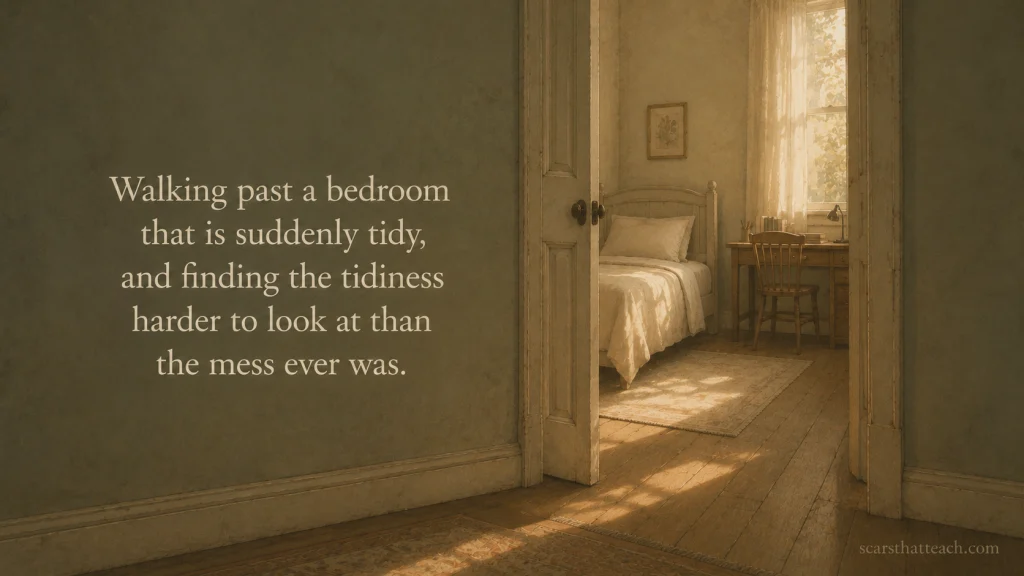
- Walking past a bedroom that is suddenly tidy, and finding the tidiness harder to look at than the mess ever was.
- Feeling unsure what to talk about with your partner once the shared project of raising kids together no longer fills the evening.
- Checking your phone for a message that used to arrive daily and now arrives once a week, or less.
- A sense of relief about the quiet that immediately triggers guilt for feeling relieved at all.
None of these mean something has gone wrong. They mean a role that structured most of your adult life has changed shape, and the discomfort of that has not caught up with the calendar yet.
When It Is More Than the Usual Adjustment
Most parents move through this in stages and come out the other side with a life that feels full again, even if it looks different than it used to. That said, this loss is not something to rush past, and it is not something everyone works through at the same pace or on their own. If the sadness is not shifting at all after a long stretch, if it is affecting sleep, work, or your closest relationships in a serious way, or if it starts to feel heavier rather than lighter as months pass, that is worth bringing to a professional rather than carrying alone. Needing that kind of support is not a sign the grief was overblown. It is a sign it deserves real attention.
Final: The Role Ends, You Do Not
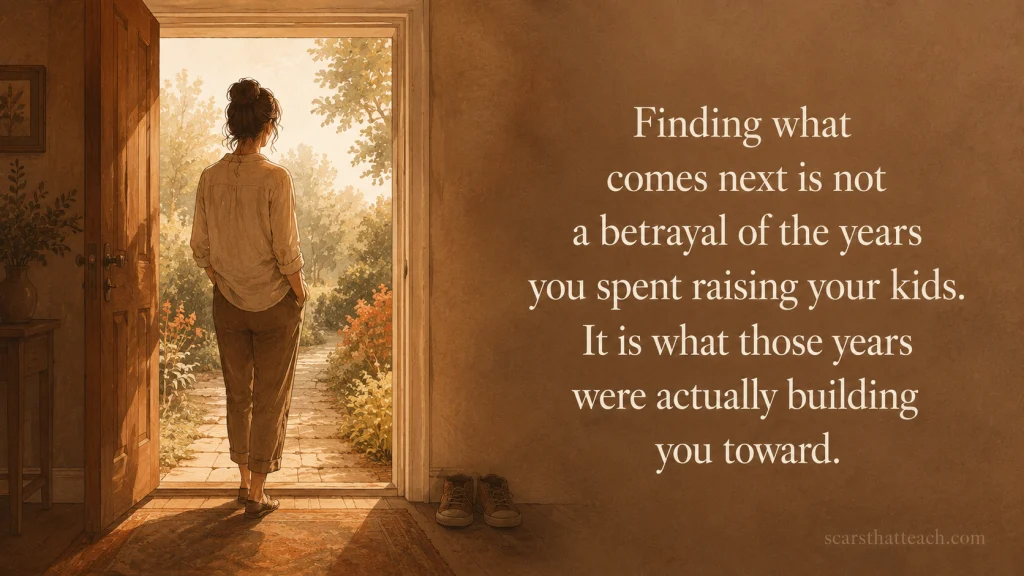
What I would want a parent sitting in this quiet to know is that the loss is real, and it does not need a hobby to justify it. Building your entire sense of self around one role or one relationship, even one as good and necessary as parenting, has more in common than most people expect with what happens when someone loses themselves entirely inside a relationship that quietly became their whole identity. The role was never meant to be the whole of you, even though for a long stretch it reasonably was. Finding what comes next is not a betrayal of the years you spent raising your kids. It is what those years were actually building you toward.
If loneliness is showing up in other parts of your life right now too, not just this specific quiet, there is more on the different shapes disconnection takes at different life stages. This is one shape among several, and knowing which one you are actually in tends to matter more than any single fix.
FAQs
🏠 What is empty nest loneliness, exactly?
It is the grief and loneliness parents feel once their children move out for college, work, or independent life. It is a recognized, non-clinical experience, not a sign of being overly attached to your kids.
🌗 Why do I feel relieved and sad about my kids leaving at the same time?
Both feelings are part of the same process, and they can show up in the same day without canceling each other out. Relief does not mean you love your kids any less, and sadness does not mean you are not ready for this next stage.
📞 Why does empty nest loneliness feel bigger than just missing my kids?
For most parents, the deeper loss is identity, not just company. Parenting was the clearest role you had for close to two decades, and losing that role can feel disorienting even when your relationship with your kids stays close.
🧩 Will finding a hobby actually fix empty nest loneliness?
It can help fill the hours, but it rarely answers the deeper question of who you are now that the day-to-day job of raising kids is done. That part usually takes more time than a new activity can provide on its own.
🩺 When should empty nest loneliness be brought to a professional instead of managed alone?
If the sadness is not easing after a long stretch, or it is seriously affecting your sleep, work, or closest relationships, that is worth bringing to a professional. Needing that support does not mean the grief was overblown.