The habit loop is simpler than most explanations make it sound: a cue triggers a routine, the routine delivers a reward, and craving is what glues the three together so the cycle repeats without you deciding to repeat it. Once you see the craving instead of just the behavior, a habit stops looking like a character flaw and starts looking like a mechanism you can actually work with. This piece walks through how the loop functions, why trying to erase a routine outright almost never works, and what changes when you replace the routine instead of fighting it.
Why the Habit Loop Explains More Than People Expect
An older minister told me something early in my chaplaincy work that I did not understand until I had sat with enough families to see it play out over and over. He said if I ever wanted to understand why someone did what they did, I should stop asking what they decided and start asking what they were chasing. Decisions are the story people tell afterward. What they were chasing is usually the truer answer, and it is almost never something they would say out loud.
That distinction is the whole reason understanding how the habit loop works matters more than most people expect going in. A habit is not a decision repeated. It is a cue that sets something off, a routine that follows automatically, and a reward at the end that your brain has already learned to expect. The behavior is the visible part. The craving underneath it, the anticipation of that reward, is what actually keeps the loop turning long after the original reason for the behavior is gone.
The Three Pieces, and the One People Skip Past
Charles Duhigg, who spent years researching behavior patterns for his work on habit formation, breaks the loop into three parts: cue, routine, reward. The cue is the trigger, a time of day, a location, an emotional state, another person walking into the room. The routine is the behavior itself, the part everyone focuses on when they talk about “breaking a habit.” The reward is what the brain gets out of it, and it does not have to be pleasant in any obvious sense. Relief counts. Distraction counts. A few seconds of not having to feel something counts.
What most explanations of the cue routine reward habit loop leave out, or mention only in passing, is craving. Craving is the anticipation that forms once your brain has linked the cue to the reward enough times. It is not the reward itself. It is the wanting of it, arriving before the routine even starts. That is the part that makes habits feel involuntary. You are not choosing the routine in the moment. You are already partway through chasing the reward before you have consciously registered the cue at all.
- You feel restless or uneasy before you have even started the routine, not during it.
- Stopping the behavior cold leaves a specific kind of itch that willpower alone does not seem to touch.
- You have tried to quit the same habit more than once using pure restriction, and it came back within weeks.
- The habit shows up in more than one context, which usually means the reward it is chasing is emotional, not situational.
If more than one of those sounds familiar, the problem usually is not a lack of discipline. It is that the craving driving the loop was never addressed, only the routine sitting on top of it.
What I Watched Play Out in Hospital Waiting Rooms
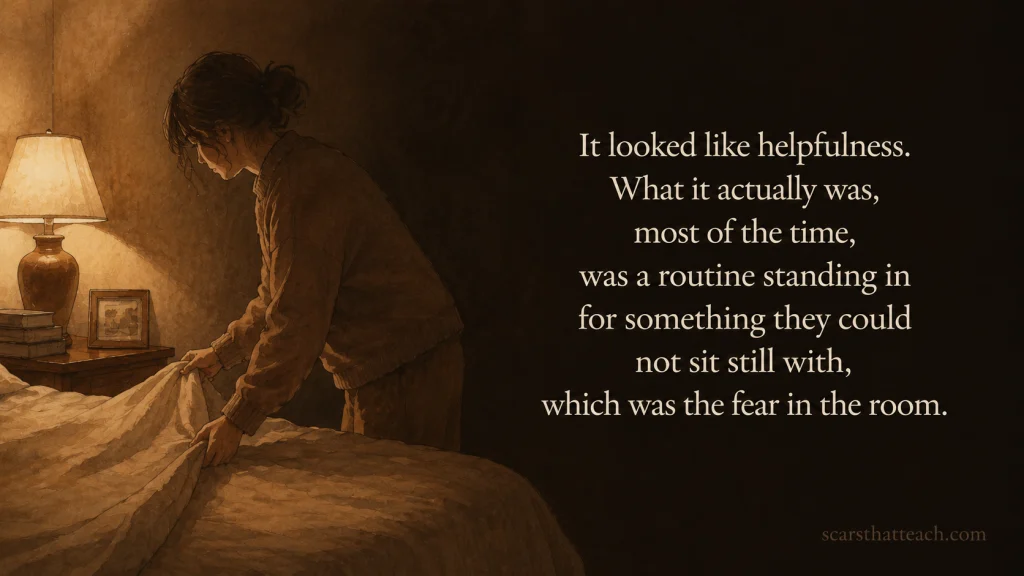
I saw a version of this constantly in hospital and hospice settings, in family members who were not trying to break any habit at all, just trying to get through a day none of them wanted to be living. One pattern I saw often enough to stop calling it a coincidence: someone in the family, usually not the primary caregiver, would take on a small repeated task the moment they walked in. Making coffee nobody asked for. Straightening a blanket that did not need straightening. It looked like helpfulness. What it actually was, most of the time, was a routine standing in for something they could not sit still with, which was the fear in the room.
When a hospital kitchen closed for renovation and one man could no longer make his usual pot of coffee on arrival, he did not stop the behavior underneath it. He started pacing the hallway outside his mother’s room instead, at almost the exact same point in his visit, every time. The cue had not changed. The reward, a few minutes of motion instead of stillness, had not changed either. Only the routine had moved. That is the clearest version of the habit loop I have ever watched happen in real time, and nobody involved would have called it a habit. They would have called it nerves.
Why Removing a Habit Rarely Works, and What Does
Most advice about changing a habit treats the routine as the whole problem, which is exactly what makes so much of that advice fail. The cue and the reward your brain is chasing tend to stay fixed. What can actually move is the routine sitting between them. Keep the same cue, keep the same underlying reward, and swap out only the behavior that gets you there. That substitution, not sheer removal, is what tends to hold.
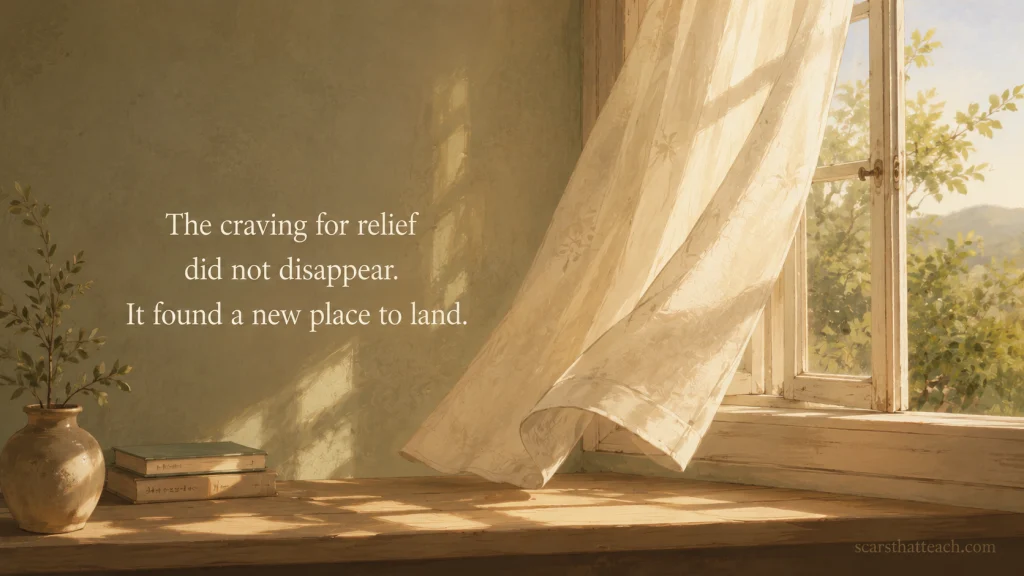
This is the piece most people get wrong when they try to change something about themselves through pure restriction. They treat the routine as the enemy and try to delete it, without ever asking what reward it was delivering. A woman I spoke with once had tried for years to stop checking her phone every few minutes during a stressful season. Willpower held for a few days at a time and then collapsed. What actually worked was replacing the checking with a different small physical action, tied to the same cue, the same moment of anxiety, that delivered a similar sense of doing something instead of nothing. The craving for relief did not disappear. It found a new place to land.
None of this is a promise that seeing your own loop clearly will make the craving vanish. It will not. What it changes is where you aim the effort. Instead of white-knuckling against a routine, you can look for a different one that answers the same underlying want, which is a fight you are far more likely to actually win.
Final Thoughts: Aim at the Craving, Not the Behavior
The habit loop is not a productivity trick, and it was never meant to be one. It is a description of how a cue, a routine, and a reward link together through craving until the behavior runs on its own. Once you can name which part of your own loop is doing the work, the routine you have been fighting stops looking like the whole problem. It is only ever the visible piece sitting on top of something your brain learned to want a long time ago.
If you are working through consistency more broadly and want the wider picture beyond this one mechanism, that gets covered in more depth at how consistency actually holds up over time. And if the idea of discipline itself is what you keep circling back to, there is a collection of verified quotes on discipline and self-control worth reading alongside this. Two related pieces worth knowing about as well: one on how long it actually takes for a habit to form, and another on what keystone habits are and why they matter, both of which build on the same loop described here.
FAQs
💬 What is the habit loop in simple terms?
It is the cycle of cue, routine, and reward that runs underneath most repeated behavior. A trigger sets it off, the behavior follows, and a reward at the end teaches your brain to want that same cycle again.
🧠 Why do habits feel so hard to break even when I want to change them?
Because the craving driving the loop forms before you consciously notice the cue. You are not fighting a single choice in the moment. You are fighting an anticipation that built up over many repetitions.
🔁 Can you change a habit by changing the reward instead of the routine?
Usually the more reliable move is the opposite: keep the cue and the underlying reward the same, and change the routine that connects them. Removing a routine with nothing to replace it tends to leave the craving with nowhere to go.
⏳ Does understanding the habit loop actually make it easier to change a habit?
It will not remove the craving on its own, but it changes what you aim your effort at. Once you can name the cue and the reward you are chasing, you can look for a different routine that satisfies the same want instead of fighting the routine directly.
🎯 What is craving in the context of the habit loop?
Craving is the anticipation of the reward, arriving before the routine even starts. It is the part of the loop that makes a habit feel automatic rather than chosen, and it is usually the piece people overlook when they try to change a behavior.