Most people who try to break a bad habit use the same method: they decide to stop, and they rely on willpower to hold that line when the old urge shows up again. I have watched that approach fail more times than I can count, not because people lacked discipline, but because removal alone rarely works against a pathway the brain has already built. This is about why bad habits are so hard to break, and why the more reliable path is rarely about stopping the old behavior outright. It is about replacing it.
Most People Have Already Tried to Stop, and Already Failed the Same Way
People confided in me about habits far more often than I expected when I started this work. Not addiction, not the things that needed a clinical hand, but the ordinary ones. The late-night phone scrolling. The second glass of wine that became the third. The way a hard conversation always got put off with something smaller and easier instead. What struck me over the years was how similar the story always was. Someone decided to stop. They held on for a few days, sometimes longer. Then the same cue arrived, the same stretch of boredom or stress or quiet evening, and there was nothing standing in the gap where the old habit used to sit. So the old habit filled it, the same as it always had.
That pattern is not a failure of willpower, even though it almost always gets described as one. It is what happens when someone tries to remove a habit instead of replacing it. The cue does not go away just because the person decided to stop responding to it. Neither does the pull that cue creates. Once you understand why that old pathway remains available, it becomes much easier to see why bad habits are so difficult to leave behind. After enough failed attempts, most people stop trusting themselves before they ever stop trusting the method they kept using.
Why Willpower Alone Rarely Holds
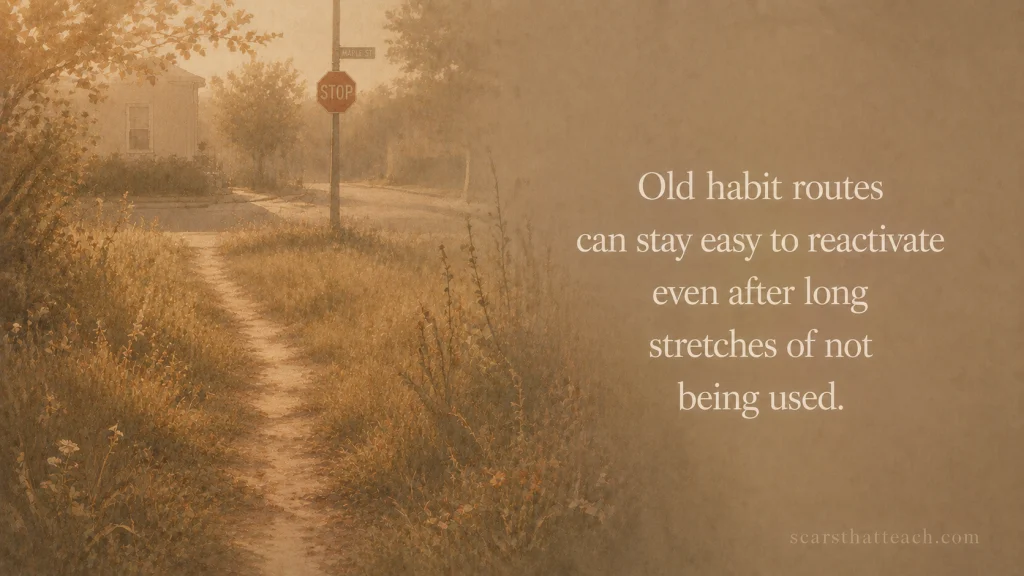
The instinct to simply stop makes sense on the surface. If a behavior is causing harm, the obvious answer looks like removing it. But habits do not live in the part of the brain that responds well to decisions made once and then forgotten about. They live in a pathway that gets reinforced every time it runs, and stopping the behavior for a while does not erase that pathway so much as quiet it. Research on habit formation backs this up directly: old habit routes can stay easy to reactivate even after long stretches of not being used, which is part of why a habit someone thought they had broken years earlier can resurface almost instantly under the right conditions.
This is why the person who quit smoking eight years ago can still feel the old pull walking past a certain corner where they used to light up on a break. The cue was still capable of reaching it. What actually changed, if the person stayed away from smoking that whole time, was that a new routine had been running in that space instead, strong enough to keep the old one from taking over again.
The Substitution Principle Most Advice Leaves Out
Most of what gets written about breaking a bad habit focuses on two things: removing the trigger, or building enough willpower to override it. Both have some value. But they miss the part of habit research that explains why removal so often fails on its own. A habit is built from three connected pieces: a cue that starts it, a routine that follows, and a reward that reinforces it. Journalist Charles Duhigg’s research on habit formation describes what has become known as the Golden Rule of habit change. Because the cue and the reward stay linked in the brain regardless of what a person decides consciously, the most reliable way to change a habit is not to remove the loop entirely. It is to keep the same cue and the same reward, and replace only the routine sitting between them.
This distinction matters more than it sounds like it should. Most people trying to break a habit focus all their energy on the routine itself, the smoking, the scrolling, the snacking, and try to will it out of existence. But the routine was never the part holding the habit in place. The cue and the reward were. Remove the routine without addressing what it was supplying, and the brain keeps reaching for that same reward through whatever path is available, usually the old one, because it is the only path it has ever known to get there.
Part of why this gets missed is that swapping one behavior for another can feel like the easy way out, as though quitting cold turkey is the version that actually takes strength. I never saw it that way. The people I watched succeed at breaking something long-standing were rarely the ones white-knuckling their way through the old cue with nothing else in its place. They were the ones who had figured out, often through trial and error, what the habit had actually been giving them, and found something else that could give them a version of that same thing.
Even a well-matched replacement fails sometimes, and it is worth naming why. A new routine that requires far more effort than the old one rarely survives a bad day, because the brain will always default to the easier path under stress. A replacement that delivers its reward too slowly has the same problem. The old habit gave something back almost instantly, and a new routine that makes someone wait ten minutes for a comparable payoff loses out to the old one nearly every time. The habits that actually stick are usually the ones that are just as easy to reach for as the behavior they replaced, and that pay off close enough to right away that the brain has no reason to look elsewhere.
A habit rarely gets removed. It gets replaced by whatever is standing in its place the next time the old cue shows up.
Figuring Out What the Habit Was Actually Doing
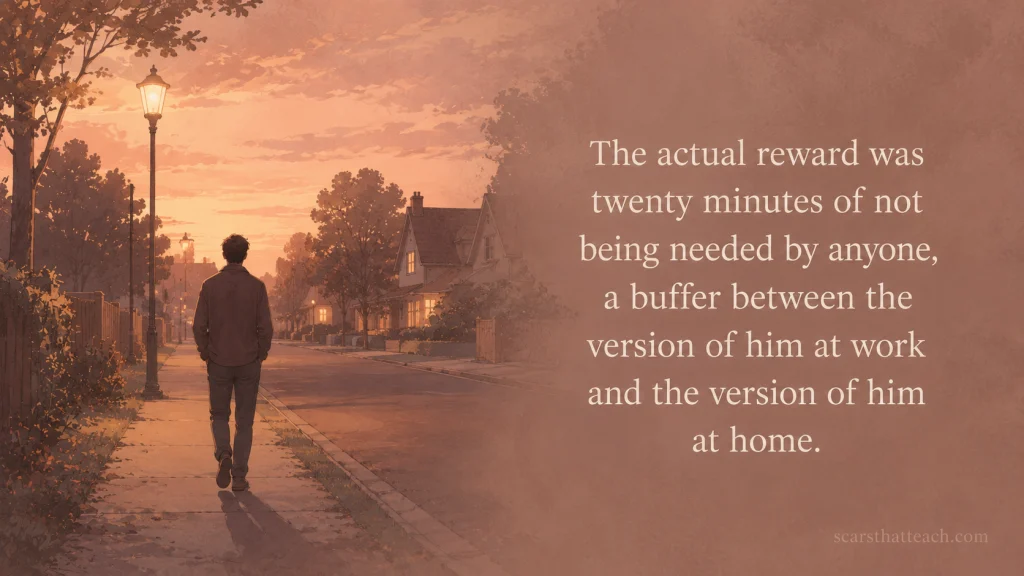
The hardest part of this work is rarely picking a new routine. It is figuring out what reward the old one was actually delivering, because it is often not the obvious answer. A man once told me he wanted to stop the habit of stopping at a bar on his way home from work most nights. He assumed the reward was the drink itself. It took him a few weeks of paying closer attention to notice that the actual reward was twenty minutes of not being needed by anyone, a buffer between the version of him at work and the version of him at home. Once he understood that, he replaced the bar with a walk around the block before he pulled into his driveway. Same cue, the drive home. Same reward, the buffer. Different routine.
Here is where people commonly get this wrong, and it is worth saying plainly: they pick a replacement based on what looks healthy rather than what actually satisfies the same craving. A person trying to stop late-night snacking might replace it with drinking water, assuming that solves the problem because it addresses the physical act of putting something in their mouth. If the real reward was distraction from a restless mind at the end of a long day, water will not touch that, and the old habit will return within a week. Getting this right takes some honest self-observation before it takes any willpower at all.
A few questions tend to surface the real reward faster than guessing does:
- What does the habit interrupt: boredom, stress, loneliness, or something else entirely?
- What happens in the ten minutes right before the habit usually starts?
- Does the craving show up at a specific time of day, or in response to a specific feeling?
- What did the last attempt to quit actually feel like right before it failed?
- Is there a version of the reward that could come from somewhere else entirely?
None of these questions have universal answers. What satisfies one person’s craving for a break in the afternoon will do nothing for someone whose habit is really about avoiding a hard feeling at the end of the day. The specifics of a person’s own life, their stress points, their schedule, their relationships, shape what an honest substitution actually looks like far more than any general framework can. This is closely tied to how the habit loop actually functions, which goes deeper into the mechanics behind why cues carry this much weight in the first place.
Where This Framework Stops Applying
I want to be honest about the limits of what I am describing here, because this framework was never meant to cover everything people call a bad habit. Substance use, disordered eating, and other patterns that involve physical dependency or a clinical diagnosis are not what this is about, and treating them the same way as an everyday habit like nail biting or procrastination would be doing real harm. Those situations need a doctor, a therapist, or a treatment program built for exactly that kind of complexity, not a substitution exercise. If what someone is carrying feels bigger than an everyday pattern, that distinction matters more than anything else in this piece.
What I am describing applies to the ordinary habits most people are quietly trying to change: the procrastination, the doom-scrolling, the snapping at a partner when the day has gone badly, the habit of avoiding a hard conversation by picking a fight about something smaller instead. Those are the habits where a cue, a routine, and a reward genuinely explain most of what is happening, and where finding a different routine to meet the same need tends to work far better than trying to will the old one out of existence.
Final Thoughts: Stop Fighting the Cue and Start Answering It
Nobody I ever sat with broke a long-standing habit by refusing to feel the pull of it. They broke it by understanding what that pull was actually asking for, and giving it a different answer. That shift changes the whole fight. Instead of standing at the edge of an old cue with nothing but willpower between you and the routine that always follows, you walk in already knowing what you are going to do instead, because you finally understand what the habit was buying you all along. The same honesty shows up in most of what I have gathered about discipline and what actually sustains it, since discipline tends to hold up better when it works with a habit’s structure instead of against it. If you want more on building that kind of consistency in daily life, there is a broader collection of writing on consistency and habits worth working through alongside this.
FAQs
🔁 Why can’t I break a bad habit no matter how hard I try?
Willpower alone often fails because it targets the routine while leaving the cue and reward untouched. The old pathway stays reachable even after you stop using it, which is why the same trigger can pull you right back to it later.
🧠 What is the Golden Rule of habit change?
It is the idea, drawn from Charles Duhigg’s research on habits, that the most reliable way to change a habit is to keep the same cue and reward while replacing only the routine in between them, rather than trying to remove the whole pattern at once.
❓ Why do old habits come back even after years of not doing them?
The brain does not fully erase a habit once it goes unused. It stays available in a quieter form, so the right cue at the right moment can bring it back to the surface quickly even years later.
🔍 How do I find a good substitute for a bad habit?
Start by identifying what reward the habit was actually giving you, whether that’s stress relief, distraction, or a break from something difficult, and look for a different routine that can deliver a similar reward through the same cue.
⚠️ Does this substitution approach work for addiction or eating disorders?
No. This framework is meant for everyday habits, not for substance use, disordered eating, or other patterns that involve clinical dependency. Those situations need professional support built specifically for that complexity.