Grief does not move in a straight line, no matter how much people expect it to. It arrives in waves, sometimes with a clear trigger and sometimes with none at all, and a wave returning months or years after a loss does not mean you have gone backward. This is about why grief in waves is the normal pattern rather than the exception, what actually sets a wave off, and why the moment you think you are fine is so often exactly when one arrives. You will walk away with language for something that has probably confused you more than the loss itself.
Why Grief Comes in Waves
The grief that disoriented people most, in my experience, was rarely the grief of the first weeks. People expect that one. Family gathers, casseroles arrive, everyone understands why you are not yourself. The grief that actually threw people was the kind that showed up on an ordinary Tuesday, a year or three years later, with no funeral in sight and no one around who remembered the date. It came out of nowhere, or seemed to, and it left people wondering whether they had made any progress at all.
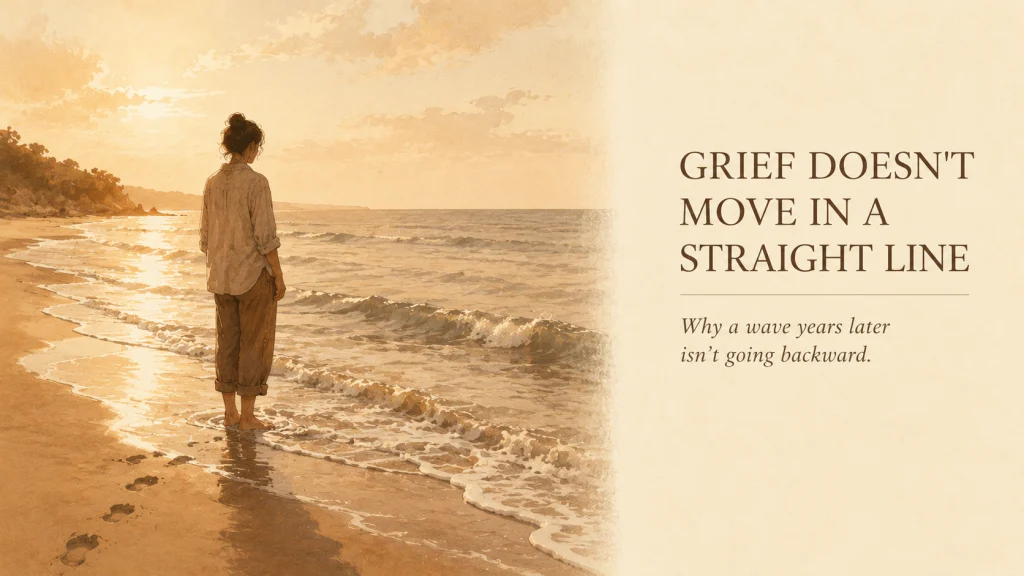
That pattern has a name, even if most people never hear it until they are already living through it. Grief does not diminish steadily the way a bruise fades. It moves in waves, intense and sudden, then quieter for a stretch, then intense again, often for years. A wave showing up long after you thought you were past something is not a sign you have failed at grieving. It is closer to how grief actually works for almost everyone who has lost something that mattered.
Grief Was Never Going to Move in a Straight Line
Most people carry an unspoken timeline in their head. A rough sense that grief should get smaller month by month, and that if it does not, something is wrong with how they are handling it. That timeline is not how grief actually behaves, and holding yourself to it usually just adds a second layer of pain on top of the first one. What tends to happen instead is an oscillation. Some days, sometimes long stretches, are spent functioning normally, even genuinely engaged in life again. Then something pulls you back into the loss fully, sometimes for an afternoon, sometimes for a week, before you surface again.
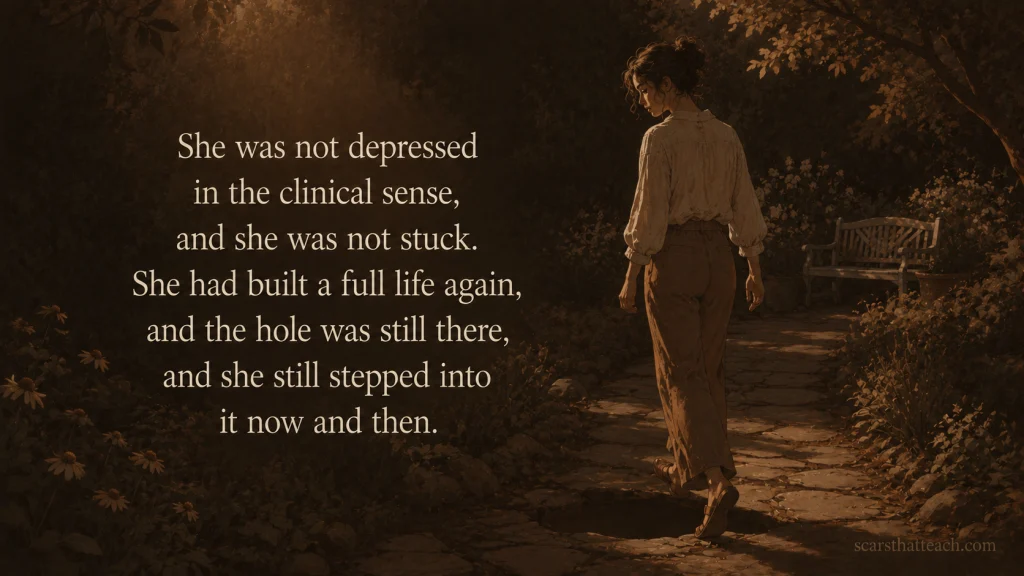
I sat with a woman once, years after her son had died, who described it as walking along fine and then stepping into a hole she had not seen. She was not depressed in the clinical sense, and she was not stuck. She had built a full life again, work, friendships, moments of real happiness. The hole was still there, and she still stepped into it now and then, and both of those things were true at once. That is closer to how grief resurfaces for most people than any version where it simply gets smaller and stays that way.
What Actually Sets a Wave Off
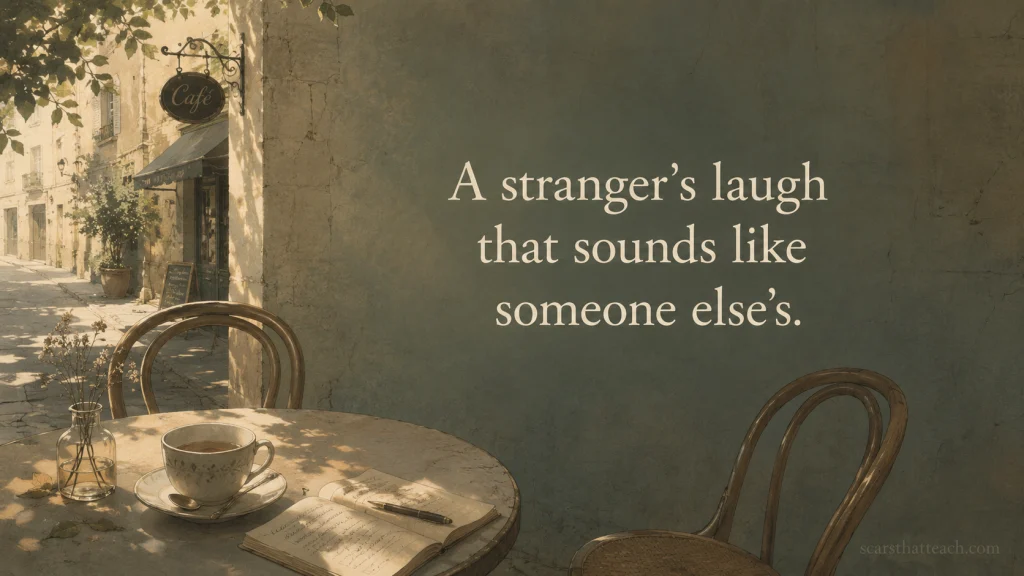
Sometimes a wave has an obvious cause. An anniversary, a birthday, a holiday that used to belong to two people and now belongs to one. Other times the trigger is something small enough that it catches you off guard precisely because you did not see it coming: a smell, a song on the radio, a stranger’s laugh that sounds like someone else’s. And sometimes there is no identifiable trigger at all. The wave simply arrives, uninvited, and trying to trace it back to a cause can leave you more unsettled than the wave itself.
A few of the more common triggers people describe, in case any of these sound familiar:
- A specific date: an anniversary of the death, a birthday, a holiday that used to include the person.
- A sensory cue: a particular song, a scent, a certain kind of weather or time of year.
- A milestone that the person is not there for: a graduation, a wedding, a first grandchild, a promotion.
- An unrelated loss or difficult moment that reopens the older one without warning.
None of these mean you are back at square one. They mean grief is still connected to your life, and life keeps handing you moments that are wired to that connection.
The Mistake Almost Everyone Makes
Most of what gets written about grief waves stops at naming the pattern. It tells you waves happen, maybe even tells you they are triggered by anniversaries or sensory cues, and leaves the harder question unanswered: what does it mean when one hits you this hard, this far out. Left without an answer, people tend to fill the gap with the worst available explanation. They decide the wave means they never really processed the loss, or that they have been pretending to be fine, or that everyone else moves on and they simply have not.
None of that is what a wave means. A wave means grief responds to triggers, and triggers are part of being alive in a world that keeps producing them. The person you lost had a birthday. That birthday did not stop existing because they died. Life keeps generating anniversaries, songs, smells, and milestones, and every one of them is capable of reaching back into the loss and pulling a piece of it forward. That is not regression. It is closer to proof that the connection was real and still is.

Final: The Wave Is Not the Problem
If you want a way to hold this that actually helps, try this one: healing was never going to mean the loss stops mattering. It means you build a life around it that can absorb a wave without being flattened by it every single time. That is a different, more honest goal than the one most people quietly set for themselves, which is closer to waiting for the grief to disappear entirely. It will not disappear entirely, not for most losses that were real. It does not need to, for you to also build something worth living.
The same non-linear shape shows up outside of grief too, in the kind of setbacks and second chances explored in reflections on failure and starting over, where progress rarely moves in a straight line either. If what you are dealing with feels less like waves and more like grief that has never really shifted since the beginning, that may be closer to what is covered in why grief resists a fixed timeline, a related but different question. And if a wave is lasting for weeks at a time, or is making it hard to function at work or at home over an extended stretch, that is worth naming to a professional rather than carrying alone. For most people, though, the wave passes, life comes back, and the connection that caused it was never really the problem to begin with. There is more on that, and on other shapes grief takes, in other honest questions about grief and loss.
FAQs
🌊 Why does grief come in waves instead of just fading over time?
Grief does not diminish in a straight line for most people. It moves in waves, active and intense for a while, then quieter, then active again, often for years. That oscillation is the documented, normal pattern, not a sign that something has gone wrong.
📅 Why does grief resurface on anniversaries or holidays specifically?
Dates carry weight because they used to belong to the person you lost. A birthday, an anniversary of the death, or a holiday that once included them can reactivate the loss even years later. It is a trigger, not a setback.
🎵 Can grief come back even without any obvious trigger?
Yes. Sometimes a wave arrives with no identifiable cause at all, and trying to trace one can make it feel more unsettling than it needs to be. Not every wave has to make sense in the moment for it to be normal.
🕳️ Does a strong wave of grief mean I have not healed?
No. A returning wave does not mean you have gone backward or that you were pretending to be fine. It means grief is still connected to your life, and life keeps producing moments wired to that connection.
🤍 How long do grief waves usually last?
Most waves pass in hours or days, not weeks. If a wave is stretching on for weeks at a time or making it hard to function, that is a reasonable moment to talk to a professional rather than manage it alone.