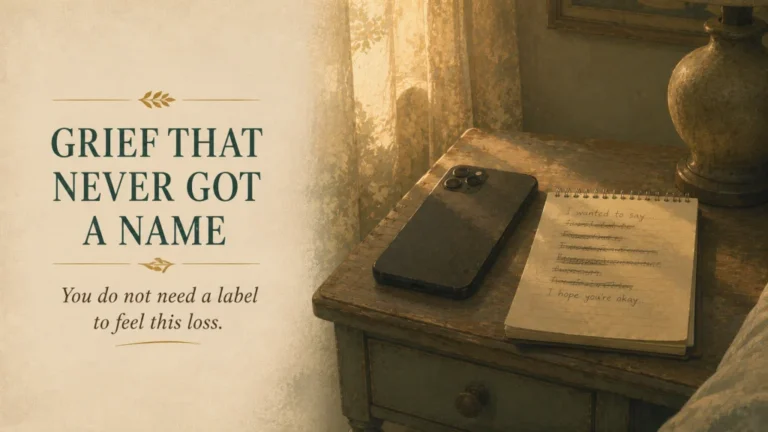
Breaking up with someone you still love is one of the harder endings to sit with, because there is no one to be angry at and nowhere to put the pain. I spent two decades sitting with people at the end of life, and I noticed that the ones who struggled longest with a loss were often not the ones who had been wronged. They were the ones who had nothing to blame. This piece is about why a no-fault breakup tends to hurt in a specific, delayed way, what actually happens when anger is missing from the equation, and what I have seen help people carry that particular kind of grief without rushing it or shaming themselves for still feeling it.

When There Is No One to Forgive
Over twenty years of sitting with dying patients and the families around them, I noticed something that surprised me at first. The visitors who struggled hardest to find peace were rarely the ones nursing a grudge against someone who had wronged them. More often, it was the ones who had nothing to point to. No affair, no lie, no cruelty. Just two people who had loved each other honestly and still ended up walking away from one another. They sat with me looking almost embarrassed by how much it still hurt, as if the absence of a villain meant they had less right to grieve.
Breaking up with someone you still love does not come with the built-in relief that anger provides. When a relationship ends because someone did something unforgivable, the anger gives you a place to stand. It is ugly, but it is somewhere to put your energy while the rest of you catches up. When nobody did anything wrong, that place does not exist. You are left holding the full weight of the loss with nothing to distract you from it, and that is a specific, recognizable kind of hard.

Why This Kind of Loss Gets Harder to Talk About
A no-fault breakup is a real and recognized category of loss, not a smaller version of a normal one. It happens when two people who genuinely care about each other realize the relationship itself is not working, whether that is because they want different futures, because the timing in their lives never lined up, or because something quieter than betrayal simply wore the connection down. Nobody cheated. Nobody lied. The relationship still ended, and the person on the receiving end of that ending is often left more confused than someone who can point to a specific wrong.
Part of what makes this harder to talk about is that other people do not always know how to respond to it. When you tell someone you were cheated on, they know what to say. They get angry on your behalf, and that anger becomes a kind of company for your own. When you tell someone you were leaving someone you love, or that someone left you while still loving you, people tend to go quiet, or they say something like “well, at least it wasn’t messy,” as if a clean ending should hurt less. It does not. Often, it hurts in a way that lasts longer, because the grief has nowhere to go except straight through you.
What the Missing Anger Actually Does
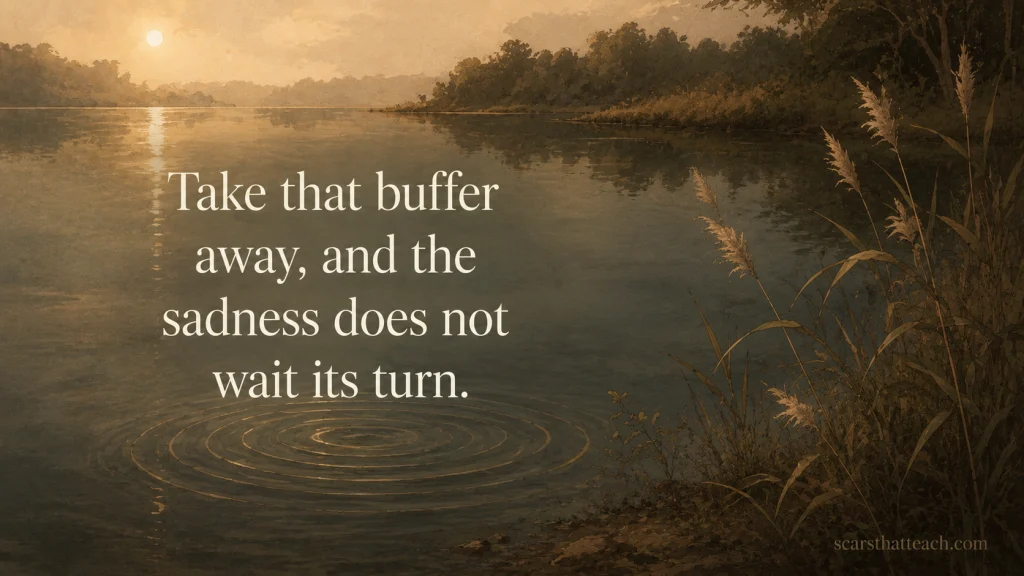
Anger, in most breakups, works like a kind of scaffolding. It gives the mind something to do besides feel the loss directly. You can spend a week being furious at what someone did, and that fury, uncomfortable as it is, buys you time before the sadness has to arrive in full. It is not a healthy long-term place to live, but in the early days it functions almost like a buffer between you and the size of what you have lost.
Take that buffer away, and the sadness does not wait its turn. There is no smaller emotion standing in front of it to absorb the first impact, so it shows up close to full strength on day one, when most people are still expecting it to build gradually. That mismatch between what people expect and what actually happens is the part they are least prepared for. There is no anger phase to eventually burn off and clear the way toward acceptance. The grief has to be metabolized directly, on its own terms, and that takes real time.
A Different Kind of Ending Than Being Left, or Being Betrayed
It helps to be specific about what this kind of ending is not. If you have been through the grief of being left by someone, you know that a lot of that pain comes from rejection itself, the sense of not having been chosen. That is a real and separate kind of hurt. A no-fault breakup can carry some of that if you were not the one who initiated it, but the core of it is different. Nobody stopped choosing you out of a lack of feeling. The relationship simply could not hold what both of you needed it to hold.
It is also different from the aftermath of discovering a betrayal, where part of the work is rebuilding trust in your own judgment about a person. When nobody betrayed anybody, that particular wound is not part of the picture. What replaces it is something quieter and, for many people, more disorienting: grieving someone you still respect, still love in some form, and have no reason to be angry at, all while trying to explain to yourself why something that was not bad still had to end.
Signs You Are Grieving a Breakup With No Villain
Not everyone experiences a no-fault breakup the same way, but there are patterns I have seen often enough to name them. If several of these sound familiar, it likely means the grief you are carrying is exactly the kind this piece is about, and not a sign that you are handling things badly.
- You catch yourself defending your ex to friends who assume you must be angry at them.
- You feel guilty for missing someone you know, logically, was not right for you long term.
- You keep waiting for a reason to be furious, and it never quite arrives.
- Other people seem to move past the story faster than you do, because there is no dramatic detail to hold their attention.
- You wonder if something is wrong with you for still hurting this much over something that ended “the right way.”
None of these mean you are stuck. They mean the loss is real and the usual shortcuts, like anger or blame, are simply not available to speed it along. That is worth naming plainly, because most of the advice aimed at heartbreak assumes there is someone to be mad at.
Why the Question of Whether You Chose Right Never Quite Settles
There is a pattern I saw often enough in hospice rooms to stop calling it a coincidence. People who had ended something clean, with nobody to point to, second-guessed the decision for years longer than people who had left an obviously bad situation. A woman I sat with near the end of her life told me she still wondered, decades later, whether she had been too hasty in leaving a man she had loved but could not build a life with. She was not wrong to have left. She simply never got the closure that comes from being able to say, clearly, that someone had forced her hand.
When you leave a relationship because of betrayal or cruelty, the decision tends to feel settled fairly quickly, because the facts do the deciding for you. When you leave, or are left, without either of those, the decision keeps needing to be re-justified, sometimes for years, because there is no external fact to point back to when the doubt resurfaces. This is not a flaw in your reasoning. It is simply what happens when a choice has to be defended entirely on its own merits, without a clear wrong to lean on. The doubt does not mean the decision was incorrect. It means the decision was made the harder way, on judgment alone, and judgment rarely feels as solid in hindsight as a fact does.
What People Get Wrong When They Try to Rush This
The most common mistake I have seen is trying to manufacture anger that is not there, on the theory that anger will make the letting go easier. People will replay small annoyances from the relationship, exaggerate old frustrations, or search for a reason to feel wronged, because feeling wronged seems more manageable than feeling grief with no target. It rarely works for long. Manufactured anger tends to collapse back into sadness within days, and it adds a layer of dishonesty about the relationship on top of a loss that was already hard enough to sit with honestly.
Why this happens is straightforward enough. Anger feels active. Grief feels passive, like something being done to you rather than something you are doing. Most people would rather feel active than passive, even if the active feeling is a worse one to live inside. The clearer path is to let the grief be exactly what it is, a response to losing something good, and to give it the same patience you would give any other loss. Whether or not you can name someone at fault has no bearing on how real it is.
Final: What I Would Tell Someone Sitting With This
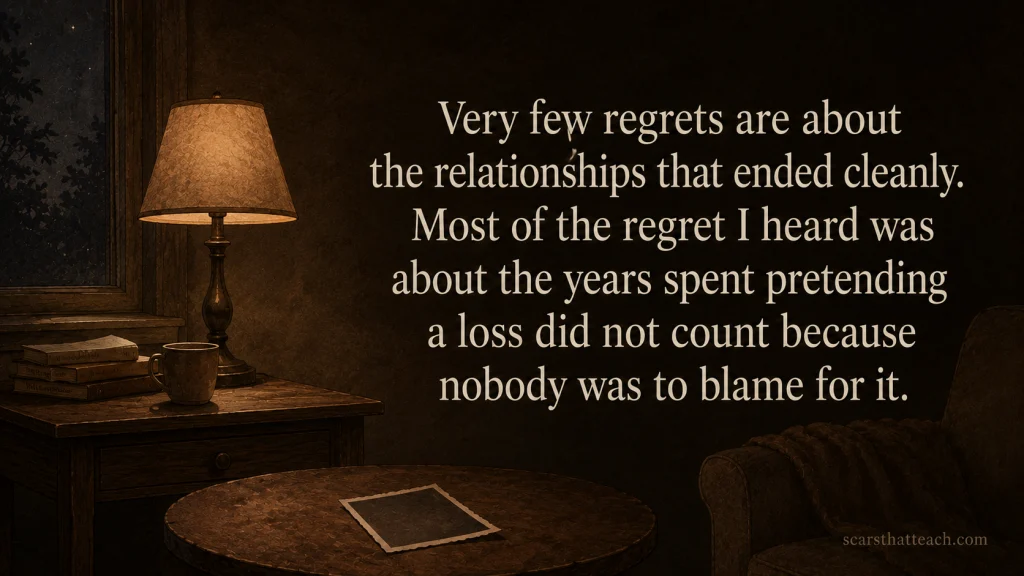
I would tell them that missing someone who did nothing wrong is not a contradiction. It is what happens when love and endings occupy the same relationship at the same time, which is more common than most people admit out loud. I have sat with enough people at the end of their lives to know that very few regrets are about the relationships that ended cleanly. Most of the regret I heard was about the years spent pretending a loss did not count because nobody was to blame for it.
What clarity can do here is modest but real. It will not make the missing stop on a schedule, and it will not turn this into a story with a clean lesson at the end. What it can do is let you stop waiting for anger that is not coming, and start giving the sadness the room it actually needs. That is not nothing. For a loss this specific, it may be the only honest place to start.
If this is only one piece of a larger heartbreak you are trying to make sense of, it may help to see how this loss sits alongside the other ways heartbreak shows up, since a no-fault ending rarely follows the same shape as the more common kinds of relationship pain. And if part of what you are carrying involves someone who was not just wrong for you but genuinely harmful to be around, that is a different reckoning, one covered in the collection on toxic relationships, because that particular grief asks something different of you than this one does.
FAQs
💔 What makes breaking up with someone you still love different from other breakups?
There is no one to blame, so the anger that usually cushions grief in other breakups is missing. The sadness arrives directly and often lingers longer as a result.
😔 Why does a no-fault breakup sometimes hurt more than being cheated on?
Betrayal gives you somewhere to direct your anger, which can temporarily soften the sadness. A no-fault ending gives you nothing to be angry at, so the full weight of the loss lands sooner and stays longer.
🕰️ How long does it take to get over someone you still love?
There is no fixed timeline, and this specific kind of loss often takes longer than people expect because there is no anger phase to work through first. Give it the same patience you would give any real loss.
🤝 Is it wrong to miss someone after a mutual breakup?
No. Missing someone you loved and respected is not a sign the breakup was a mistake. It is a sign the relationship mattered, even if it could not continue.
🧭 How do you grieve a breakup when nobody did anything wrong?
Stop searching for a reason to be angry and let the sadness be the whole response instead of a smaller part of one. Treat the loss as real on its own terms, without needing a villain to justify how much it hurts.
🚪 Should you stay in touch with someone you left because the relationship stopped working?
That depends on details only you know, like how much contact keeps the grieving process open versus closed. If staying in touch is making it harder to let the sadness move through you, some distance for a while is not a failure of love.
🌀 Why do I still question whether I made the right decision?
Without a clear wrong to point to, the decision has to be justified on judgment alone, and judgment rarely feels as solid in hindsight as a fact does. That does not mean you decided wrong. It means you decided the harder way.