Some of the deepest grief I ever sat with in a hospice room did not belong to someone mourning a death. It belonged to people mourning a future that had never actually existed, only been imagined in detail. Unrequited love gets treated as something smaller than real heartbreak because no relationship technically began. What I learned sitting with people carrying it is that the loss is real. It is just aimed at something most people never learn to name.

The Grief No One Thinks to Take Seriously
A woman once sat with me for nearly an hour talking about a man she had never dated. They had worked together for two years. She could describe, in exact detail, the apartment they would have shared, the way he would have looked at her across a kitchen on an ordinary Tuesday, the version of her own life that included him in it. None of it had happened. He did not love her back, and nothing between them had ever been more than friendly conversation over a shared desk. She apologized for crying about it. She said it felt embarrassing to grieve something that was never real.
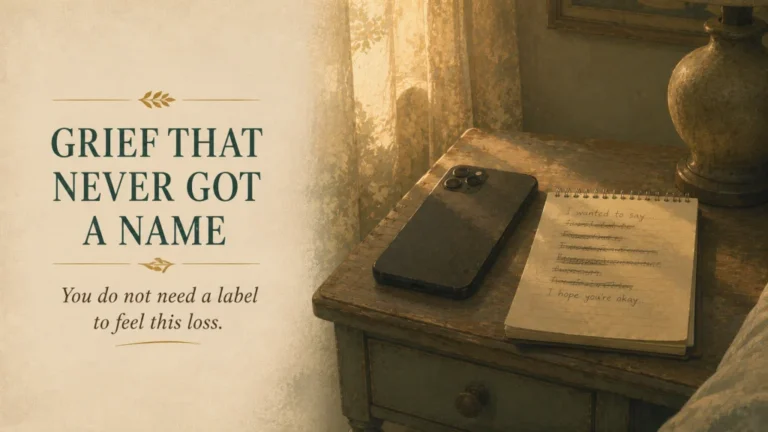
What she described afterward was familiar to me even though I had never met the man. She still glanced at her phone when something funny happened at work, half expecting to text him about it before she remembered there was no reason to. She still walked past the coffee shop where they used to grab lunch and pictured him sitting there, even months after he had stopped crossing her mind most days. I told her what I still believe now: what she was carrying was real. Not the relationship. The life she had built around it, detail by detail, was real in the sense that mattered to her nervous system and her sense of what her days were supposed to look like. Losing that is a genuine loss, even when nobody else can see what was actually lost.

The Advice People Usually Get
Most of what gets written about unrequited love follows a familiar shape. Accept the reality of the situation. Acknowledge the rejection instead of holding onto hope that the other person will change their mind. Limit contact so the feelings have room to fade instead of getting reopened every time the person shows up in your life again. This advice is not wrong. Distance from someone who cannot return your feelings usually helps, and clear acceptance of where things actually stand is often part of moving through it.
But most of that advice treats the whole experience as a self-esteem problem. The underlying message is usually some version of you deserve better, or you are enough even though they could not see it, aimed at repairing how the person feels about themselves rather than at what they are actually grieving. Self-esteem is sometimes part of what gets shaken here, but it is rarely the center of the pain. The center of the pain is something advice like this almost never names directly, and it is worth slowing down to say plainly what it actually is.

What Is Actually Being Grieved
When someone falls for a person who does not love them back, the mind rarely stays in the present. It runs ahead. It builds out what a life together might look like, fills in the small details that make that life feel real: what holidays would be like, what the other person’s laugh would sound like across a shared home, how it would feel to finally be chosen by them. None of this is delusion in any clinical sense. It is simply how attachment works when hope is given enough room to work with. The mind treats an emotionally vivid picture of a shared future as something worth investing in, and the body responds accordingly, with real anticipation, real longing, real disappointment when it does not happen.
This is why unrequited love can take just as long to grieve as the end of an actual relationship, sometimes longer. A real relationship that ends has a clear boundary. There was a beginning, there was a shared history, and there is now an ending that both people, at some level, recognize together. Unrequited love has none of that shared recognition. The other person often does not know how much was imagined, does not know a life was ever built around them, and has no reason to treat the situation as a loss at all. That mismatch is part of what makes it so isolating. The person grieving is mourning something the other person never even knew existed.
It helps to understand why the mind does this at all, because it explains why the pain can feel so disproportionate to what actually happened between two people. Attachment does not require mutual experience to form. It only requires repeated exposure paired with hope, which is exactly what unrequited love provides in abundance. Every conversation that goes a little longer than expected, every moment that could be read as interest, every small kindness gets stored as evidence that the imagined life is possible, and the mind builds on that evidence the same way it would build on an actual shared history. Researchers studying unrequited love have found that imagined interaction, the internal rehearsal of conversations and scenarios that never happened, plays a real role in how deeply someone becomes attached to a person who has given them little to go on. The brain, in other words, does not distinguish sharply between a future that was lived and one that was only rehearsed in enough vivid detail. Both get treated as real investments, and losing either one produces genuine grief.
This is part of why the loss can feel so lopsided from the outside looking in. Two years of eating lunch near someone, or a handful of conversations that felt weighted with more meaning than they carried, is often enough raw material for the mind to build an entire imagined life on top of. To anyone watching from outside, nothing much happened. To the person carrying it, an entire future got constructed and then quietly dismantled, and that construction work is exactly what the grief is responding to.
What gets missed in most advice on this is that the imagined life does not evaporate just because someone accepts the rejection intellectually. Acceptance of the facts and grief over what was pictured are two different processes, running on two different timelines. A person can fully understand and even repeat back the reasons the relationship was never going to happen while still waking up some mornings missing a version of their days that was never actually theirs. That is not a failure to move on. It is what grieving something imagined actually looks like from the inside.
What gets lost in unrequited love is rarely the person. It is the life you had already started living in your head, quietly and in real time, long before anyone told you it would not happen.
Why This Grief Gets Dismissed
There is a specific kind of grief that goes unrecognized by the people around it, sometimes called disenfranchised grief. It shows up whenever a loss does not fit the shape society is prepared to acknowledge, and unrequited love often falls directly into that category. Friends who mean well will say some version of at least you did not actually lose anything, as if the absence of an official relationship makes the mourning less legitimate. That response, however kindly intended, tends to push the grieving person toward silence rather than support, because it teaches them that naming the loss out loud invites correction instead of comfort.
I watched this pattern often enough in my own work to trust it. People who were mourning a life they had built in their heads learned quickly not to bring it up, because the reaction they got made the grief feel smaller than it actually was to carry. That silence does not make the loss disappear. It just makes it harder to move through, because grief that has nowhere to go circles instead of resolving.
What Actually Helps
Naming the real loss matters more than most advice accounts for. Saying plainly, even just to yourself, that what you are grieving is a life you had built rather than the person themselves, tends to loosen the shame that usually surrounds this kind of heartbreak. It also makes the grief easier to sit with, because it stops feeling like an overreaction to nothing and starts feeling like what it actually is: mourning something that mattered. That can be as small as letting yourself notice, without judgment, that you still think about telling them something before you catch yourself, or that a certain street or song still pulls you back into a version of your life that never happened.
Distance from the person still matters, the way the standard advice suggests, because ongoing contact keeps that imagined life alive rather than letting it settle. But distance alone rarely finishes the work. What helps alongside it is giving the loss the same room a real relationship’s ending would get: time, some acknowledgment that it hurts, and permission to grieve a version of your days that will now have to be rebuilt around a different shape. Most people are not given that permission for unrequited love, and giving it to yourself, even without anyone else’s validation, changes how the whole experience is carried.
Final Thoughts: Mourning What Was Never Officially Yours
The woman who sat with me that afternoon eventually stopped apologizing for her grief. What changed was not that the loss got smaller. It was that she stopped needing anyone else to confirm it was real before she let herself feel it fully. If you are grieving someone who never loved you back, you are not grieving nothing. You are grieving a life you built with real care, out of real hope, and its loss deserves exactly the same patience you would give any other kind of heartbreak. For more on carrying loss and what it teaches, there is a broader collection of writing on lessons from heartbreak worth working through alongside this. It also helps to understand how people can turn deeply painful connections into something they eventually learn from, which is covered in this collection of reflections on toxic people and painful relationships.
FAQs
💔 Is it normal to grieve someone who never loved me back?
Yes. What you are grieving is usually not the person themselves but the future you imagined with them. That loss is real, even though it can be harder for others to recognize because no relationship ever officially began.
⏳ Why does unrequited love sometimes take longer to get over than a real breakup?
A real relationship ends with a shared, mutually recognized boundary. Unrequited love rarely has that, since the other person often never knew how much was imagined, which can leave the grieving process feeling unfinished and harder to close.
❓ Why do people dismiss unrequited love as not a real loss?
Because no official relationship existed, unrequited love often gets treated as less legitimate grief. This response can leave the person feeling unable to talk about what they are carrying, which tends to make the grief harder to move through, not easier.
🌱 What actually helps with getting over unrequited love?
Naming what is actually being grieved, the life you imagined rather than the person, tends to help. Combined with distance from the person and giving yourself the same time and patience you would give any other loss, that recognition usually makes the grief easier to carry.