Breaking up and getting back together repeatedly with the same person is its own specific kind of exhaustion, one that most advice treats as a single problem to be solved by finally committing or finally leaving. What gets missed is the toll of the grieving itself. Losing the same relationship more than once does not get easier with practice, and each round tends to carry an added weight: the quiet embarrassment of being back in the same place again. This piece looks at what relationship cycling actually is, why the research links it to real psychological strain, and what the repeated grief underneath it actually costs.
The Man Who Said Goodbye Four Times
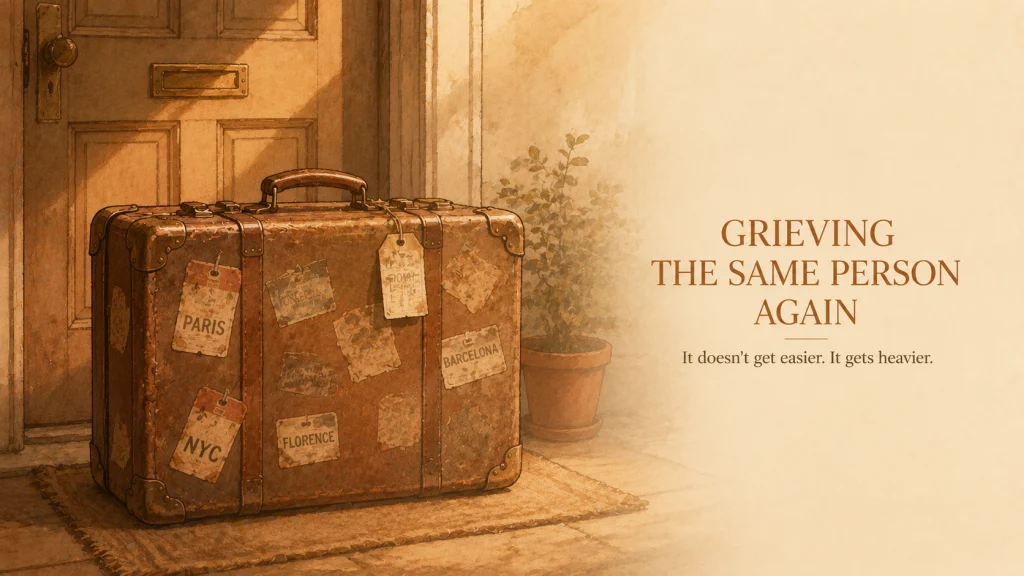
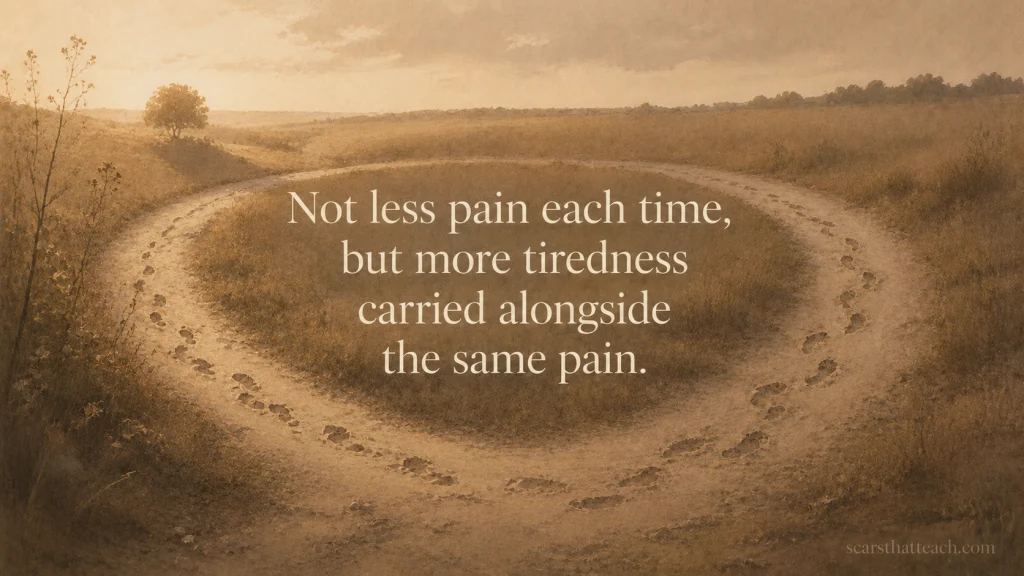
I sat with a man once, near the end of his life, who told me he had said goodbye to the same woman four separate times across thirty years. Not four different women. The same one, four times, decades apart. I asked him if it got easier by the fourth time. He said no. He said he grieved her fully every single time, as if it were the first, and that the only thing that changed was how tired he was of grieving her.
That sentence has stayed with me because it names something most people in this exact situation feel and rarely hear said out loud. Breaking up and getting back together repeatedly is not one heartbreak stretched out. It is the same heartbreak, arriving again and again, and each arrival asks something real of the person living through it.
What Relationship Cycling Actually Is
Researchers have a name for this pattern. It is sometimes called relationship cycling, sometimes churning, and it describes couples who break up and reconcile with the same partner more than once. This is not a rare or unusual pattern. Dr. Sarah Halpern-Meekin, a researcher at the University of Wisconsin-Madison, found that nearly half of young adults report this kind of on again off again pattern in their current or most recent relationship.
People in cycling relationships also tend to report higher psychological distress than people in relationships that stay stable, whether stably together or stably apart. That is not a personal failing or a sign of weakness. The uncertainty itself seems to carry a cost, since neither an ending nor a beginning gets the chance to fully settle before it gets revisited again.
Almost every source that covers this pattern frames it as a single decision waiting to be made. Commit fully, or end it for good, and the distress will resolve once the ambiguity does. That framing is not wrong exactly. But it treats the problem as a decision to be reached, when for many people living through it, the harder problem is what repeated grieving has already done along the way.

The Grief That Does Not Get Easier With Practice
There is an assumption, rarely said outright but often felt, that grieving the same loss a second or third time should be easier than the first, since the person has been through it before and presumably knows what to expect. In my experience, the opposite tends to be true. Each round of loss carries the weight of the previous ones with it, plus something extra that the first breakup did not have to carry: the sense of having to justify, at least to yourself, why you are back in it again.
That last part deserves its own attention, because it is often the heaviest piece and the least discussed. A person going through their first breakup with someone grieves the relationship itself. A person going through their third breakup with the same person grieves the relationship, and also carries the fact that they are here again, and also fields the quiet judgment, real or imagined, of friends who have watched this happen before. None of that makes the person foolish. It makes the grief more layered than a single ending ever is.
This is different from the ordinary sadness of a single, final breakup, which is explored elsewhere in these heartbreak reflections. What is specific here is the compounding. The tenth time the relationship ends is not one tenth the pain of the first time, spread out and worn smooth. It often carries all the earlier endings folded into it, plus the new one, plus the fatigue of having to find the energy to grieve again at all.
A few things tend to show up for people carrying this specific kind of repeated loss, separate from the more familiar advice about deciding whether to stay or go:
- A sense of dread that shows up before the actual ending, because some part of the person already recognizes the pattern repeating.
- Embarrassment about needing support again for what feels like the same problem, which can make people withdraw from the friends who could actually help.
- A creeping doubt about their own judgment, since the relationship keeps returning despite reasons that seemed clear the last time it ended.
- A quieter fear that shows up over time, less about the breakup itself and more about having to go through the grieving process again.
Where People Get Stuck in the Cycle
The most common mistake I see is treating every reconciliation as proof that the previous grieving was wasted effort, which then makes the next breakup feel like it has to start the emotional work over from nothing. It does not. Grief that gets interrupted by a reconciliation is not erased. It gets set down, not resolved, and it tends to resurface with the next ending rather than disappearing for good. Recognizing that can soften some of the shame of feeling like nothing was actually learned or processed the last time around.
The second mistake is measuring the relationship only by whether it is currently on or currently off, rather than by the toll the full pattern has taken over time. Two people can be technically back together and still be carrying real damage from the cycle itself, damage that a fresh reconciliation does not automatically undo. Paying attention to that cumulative cost, rather than only the current status of the relationship, tends to give people a clearer sense of what they are actually deciding when the question of staying or leaving comes up again.
There is a third pattern worth naming, one that shows up less in how people describe the relationship and more in how they start relating to their own future. Early on, the thing a person dreads is the breakup itself: the conversation, the silence afterward, the specific loss of that specific person. Somewhere around the third or fourth cycle, the dread starts to shift. It stops being primarily about losing the relationship and starts being about the prospect of having to grieve it all over again, a distinct and heavier fear than the original one. This is sometimes described as anticipatory grief, and it can start attaching itself to ordinary moments in the relationship that have nothing to do with any current conflict, simply because part of the person is already bracing for the next round before there is any sign one is coming.
That shift changes how a person reads their own reactions, and it can be disorienting in a way that deserves naming on its own. Someone who has been through this cycle a few times often starts to distrust their own relief when the relationship is going well, treating a good stretch as a countdown rather than as something to simply be inside of. They may also start doubting emotions that once felt reliable, wondering whether the calm they feel is real or just the quiet before the pattern repeats. That doubt is not a flaw in the person. It is a reasonable adaptation to a pattern that has, in fact, repeated before, even if it makes it harder to feel steady during the good periods that are genuinely happening.
Final Thoughts: The Fourth Goodbye Is Not Smaller Than the First
What stayed with me most about that man was not the number four. It was how plainly he separated the pain from the fatigue, as though he had made peace with feeling both without needing either one to explain the other away. He was not less devastated the fourth time. He was simply more depleted going into it, and he seemed to understand that both things could be true without one canceling out the other. If you recognize this pattern in your own life, the bracing you feel before things even go wrong again is not paranoia. It is a mind that has learned, accurately, that this particular loss knows how to return, and is trying to protect you from being caught off guard by it a second, third, or fourth time.
Not every kind of heartbreak involves this specific cycling pattern. For other reflections on loss and endings, there is more written on lessons from heartbreak in its many forms. And for reflections on relationships that have caused repeated harm, there is more in thoughts on toxic people that speak to some of the same terrain.
FAQs
🔄 What is relationship cycling exactly?
It is the pattern of breaking up and getting back together with the same partner more than once, sometimes called churning. Research suggests it is common, with nearly half of young adults reporting this pattern in a current or recent relationship.
😔 Why does breaking up with the same person repeatedly hurt more each time, not less?
Each round tends to carry the weight of previous losses along with it, plus the added weight of having to justify, even just to yourself, why you are back in it again. That compounding is what makes it heavier rather than easier.
🧠 Does this pattern actually affect mental health?
Research has linked relationship cycling to higher psychological distress compared to relationships that stay consistently together or consistently apart. The uncertainty of an unresolved ending appears to carry a real cost of its own.
🙈 Why do I feel embarrassed telling people we broke up again?
That embarrassment is common and does not mean anything is wrong with you. It often comes from sensing, real or imagined, that others are judging the repetition, which can make people withdraw from the support they actually need most.
🌊 Does getting back together erase the grief from the last breakup?
Not usually. Grief that gets interrupted by reconciliation tends to get set aside rather than resolved, and it often resurfaces if the relationship ends again. It is worth thinking of it as paused, not erased.
😨 Why do I feel dread during good stretches, when nothing is actually wrong?
After enough cycles, the fear can shift from the breakup itself to the prospect of having to grieve again. That can make good periods feel like a countdown rather than something safe to simply be inside of, even when nothing is currently wrong.