
Why do I need everyone to like me is a question that sounds, on the surface, like simple vanity, but it rarely is. Most people asking it are not chasing admiration so much as checking for an absence of withdrawal, proof that no one quietly stopped caring. This piece looks at the difference between the ordinary human wish to be liked and the harder, more anxious version, where someone’s mild disapproval starts to feel less like disagreement and more like danger.
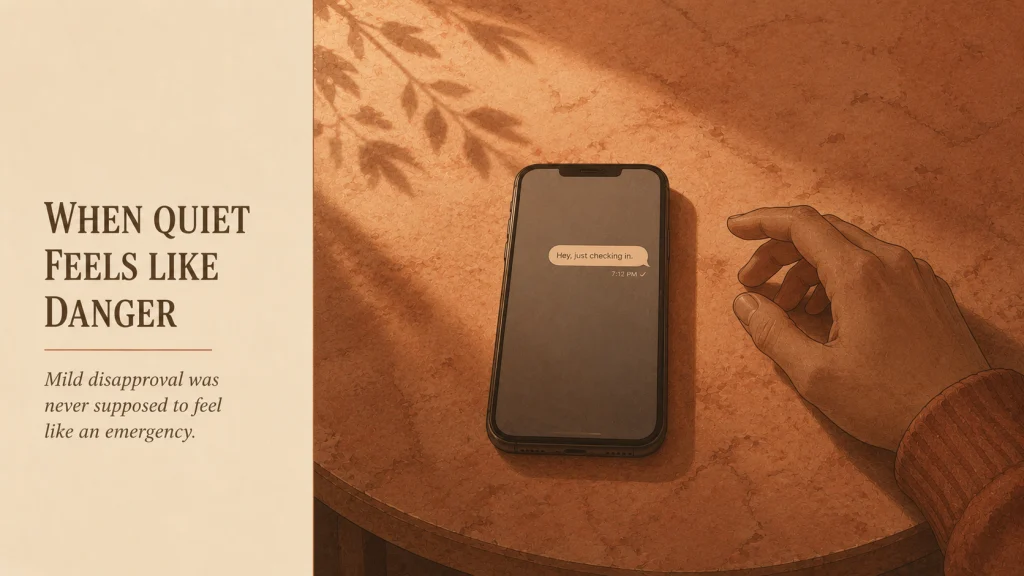
It Was Never Really About Being Admired
I have sat across from many people who described, in different words, the same underlying ache. What struck me was how rarely it was actually about wanting to be admired by everyone. More often, what they wanted was proof that no one was quietly withdrawing love from them, somewhere out of sight, without ever saying so directly. Those are two very different desires, and they come from very different places, even though they can look identical from the outside.
Wanting to be liked is not, by itself, a problem. It is one of the most ordinary things about being human. What turns it into something heavier is when a stranger’s neutral expression, a friend’s distracted reply, or one person’s mild disapproval stops registering as information and starts registering as an emergency.
Why Disapproval Can Feel Disproportionately Threatening
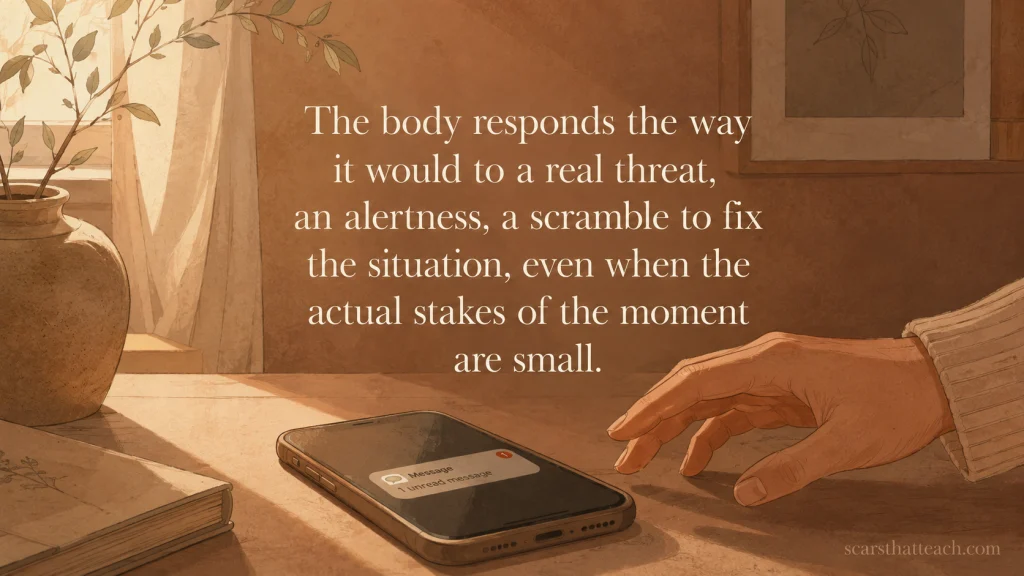
For many people who struggle with this, the pattern does not come from trying to be popular or well regarded. It comes from disapproval registering as something closer to danger than disagreement. The body responds the way it would to a real threat, an alertness, a scramble to fix the situation, even when the actual stakes of the moment are small, a coworker’s flat tone, a friend who seems a little quieter than usual.
That mismatch between the size of the trigger and the size of the reaction is the real signal worth paying attention to. It is not evidence that the reader is fragile or overreacting in some character sense. It points to a system that has learned, somewhere along the way, to treat any sign of disapproval as something requiring an immediate response, rather than as one piece of information among many. The behavior this drive often produces tends to show up downstream of this exact feeling, even when the trigger itself looks small from the outside.

Ordinary Desire to Be Liked Versus Compulsive Approval-Seeking
Most advice on this topic stops at telling readers they do not need everyone to like them, which is true but rarely helps anyone in the moment it is needed most. The more useful distinction is between two things that get treated as the same but are not. Ordinary desire for connection and approval is healthy, normal, and shared by nearly everyone. It feels like a preference. Disagreement or distance from one person does not threaten your overall sense of safety in the world.
Compulsive approval-seeking is different in kind, not just degree. There, another person’s mild disapproval or even simple neutrality registers as urgent, something that has to be addressed right away, almost regardless of how minor the actual disagreement is. The desire stops feeling like a preference and starts feeling like a requirement for safety, which is what makes it exhausting in a way ordinary social desire never is, and a long way from the steadier sense of value that comes from somewhere other than other people’s reactions.
Wanting to be liked is human. Needing it, every time, from everyone, is something else: a system on permanent alert, mistaking quiet for danger.
What People Commonly Get Wrong About This Pattern
The most common mistake is assuming this means something is fundamentally broken or pathological about them, which usually adds shame on top of an already exhausting pattern without changing anything about it. Needing approval intensely is not proof of weakness, and it is not automatically evidence of some specific past trauma either, even though it can sometimes be connected to one. Most of the time it is simply a learned calibration, worth examining without needing a dramatic explanation behind it.
The second mistake is trying to fix the feeling by becoming more likeable, working harder to please people in hopes that enough approval will finally satisfy the underlying hunger. It rarely does, because the hunger is not actually about how likeable you are. Whether people-pleasing even produces the closeness it is meant to is worth examining separately, since the answer tends to complicate that strategy further.
- One person’s neutral or flat tone can derail your entire mood for the rest of the day.
- You replay minor interactions, searching for signs that someone is quietly upset with you.
- Disagreement from someone feels less like a difference of opinion and more like a personal threat.
- You feel a disproportionate sense of relief once you have confirmed someone is not upset with you.
- Being merely tolerated, rather than warmly liked, feels uncomfortable in a way that surprises you.
What Actually Helps With This, in Practice
The most direct thing that tends to help is simply noticing the gap, in real time, between the size of the trigger and the size of the internal reaction. A flat reply is not automatically a verdict. A moment of disagreement is not automatically the beginning of someone withdrawing entirely. Naming that gap, even silently, starts to separate the actual present moment from whatever older pattern is doing the reacting.
It also helps to notice that the guilt this pattern often produces, when you finally do disappoint someone on purpose, deserves to be questioned rather than simply obeyed. That guilt has its own separate explanation worth understanding alongside this one, since the two patterns tend to reinforce each other. For concrete steps toward changing the underlying behavior this drive produces, specific ways to interrupt the people-pleasing pattern pick up where this piece leaves off.
Final Thoughts: A Preference, Not a Requirement
Needing everyone to like you is rarely about vanity, and it is rarely a sign that something is wrong with your character. It is usually a system that learned, somewhere along the way, to treat ordinary social weather as a storm worth bracing for. Loosening that grip starts with catching the moment a small, ordinary signal gets treated like an alarm, and asking whether the reaction actually fits what just happened. A wider look at how people-pleasing shows up in different forms covers related ground if this pattern extends beyond approval-seeking specifically.
FAQs
😟 Why does it bother me so much when someone seems even slightly annoyed with me?
For some people, mild disapproval registers as a threat rather than simple disagreement. The reaction can feel disproportionate to the actual situation because it is responding to an old pattern, not just the present moment.
⚖️ Is wanting to be liked a bad thing?
No. Wanting connection and approval is normal and healthy. It becomes harder when disapproval feels like an emergency rather than information, which is a different, more compulsive pattern.
🧠 Does this mean I have a trauma response?
Not necessarily. This pattern can sometimes connect to past experiences, but it is not automatically evidence of trauma. It is often simply a learned calibration worth examining on its own terms.
🪞 Will becoming more likeable fix this feeling?
Usually not. The hunger driving this pattern is not really about how likeable you are, so working harder to please people tends to leave the underlying feeling untouched, even as the effort increases.
🌱 What is the first step toward easing this pattern?
Noticing, in the moment, when a small or ordinary signal is being treated like an emergency. That noticing tends to be more effective than trying to reason the feeling away entirely.