
Why Do I Need Everyone to Like Me? The Approval Hunger Behind People-Pleasing
Why Do I Need Everyone To Like Me

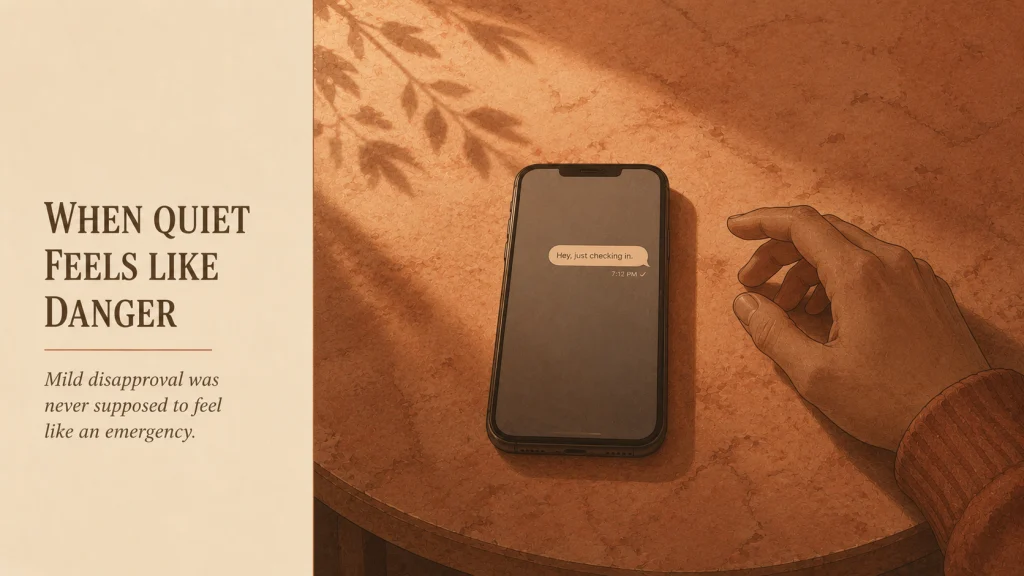
Why do I need everyone to like me is a question that sounds, on the surface, like simple vanity, but it rarely is. Most people asking it are not chasing admiration so much as checking for an absence of withdrawal, proof that no one quietly stopped caring. This piece looks at the difference between the


Why You Feel Guilty When You Put Yourself First (And Why the Guilt Is Not a Verdict)

Why You Feel Guilty When You Put Yourself First

Why you feel guilty when you put yourself first usually has nothing to do with whether you actually are selfish. The guilt that shows up the instant you try to rest, say no, or ask for something tends to be a lag indicator, a response built for a different time rather than an honest read

The Difference Between Being Kind and People-Pleasing

The Difference Between Being Kind And People Pleasing

The difference between being kind and people-pleasing is not the action itself, it is where the action comes from. A kind act can be given freely and withheld freely without much cost to the giver, while a people-pleasing act carries a quiet dread at the thought of not doing it. I spent two decades watching

Why People-Pleasing Makes You Resent the Very People You Help

Why People Pleasing Makes You Resent The People You Help

People-pleasing produces resentment toward the very people you helped, and most people find this confusing when they first notice it. The mechanism is not complicated once you see it: the person doing the accommodating pays a real cost, but that cost is never disclosed, so no one else knows a transaction occurred. The resentment that

How to Stop People-Pleasing Without Feeling Like a Selfish Person

How To Stop People Pleasing

The most common obstacle to stopping people-pleasing is not a lack of tactics. Most people who want to change the pattern already know they should try saying no more often. The obstacle is the guilt that arrives the moment they do. This piece looks at why that guilt is so immediate, what it actually signals,

Why People-Pleasing Doesn’t Make People Like You More

Why People Pleasing Doesnt Make People Like You More

People-pleasing tends to feel like a strategy for being liked, and in the short run, it often works. What it produces over time is something different: a pattern that others sense before they can name it, a closeness that never quite arrives, and a quiet accumulation of cost that the people-pleaser carries alone while everyone

Why Do I Always Say Yes When I Mean No? (And Why Saying No Feels So Dangerous)

Why Do I Always Say Yes When I Mean No

The question of why you always say yes when you mean no usually gets answered with advice about practicing better responses. That answer skips the more important question underneath: why does saying no feel so disproportionately threatening in the first place? The mechanism behind automatic agreement is not a communication deficit. It is a protection

People-Pleasing: Why You Do It, What It Costs, and How to Stop

People Pleasing

People-pleasing is a pattern most people recognize in themselves long before they understand why it keeps happening. It is not simply being nice, and it is not always rooted in trauma. It sits on a spectrum, from a conscious social choice to an automatic, driven behavior that has quietly stopped feeling like a choice at