
Being lonely after moving to a new city is rarely a problem of not knowing where the events are. It is the strange grief of having built something real somewhere else and now starting over from zero, while everyone around you already has a place to be on a Friday night. This piece looks at why the standard advice to “just get out there” misses what actually makes relocation lonely, and what helps when the ache is less about logistics and more about loss.

Why Showing Up to Events Is Not Solving the Real Problem
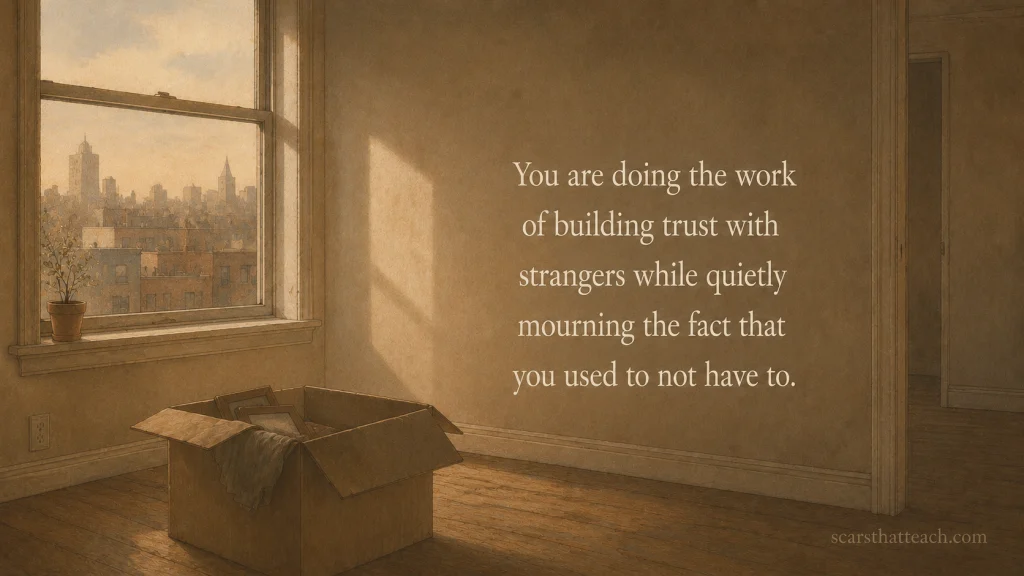
I once knew a man who had relocated for work six times across his career. Near the end of his life, he told me something that stayed with me longer than almost anything else he said. He had never once finished unpacking all the way. Not in any of the six cities. There was always a box left somewhere, half open, as if some part of him had decided that fully settling in would mean accepting that the people he had left behind were not coming with him.
If you are feeling lonely after moving to a new city, you have probably already been told to join a club, host a housewarming, or say yes to every invitation that comes your way. That advice is not wrong, but it treats relocation loneliness like a scheduling problem, something that gets fixed by enough proactive networking. What it misses is that the loneliness is not really about the absence of plans. It is about the absence of history. You can fill a calendar with new acquaintances and still feel the specific ache of nobody in the room knowing what you sounded like before any of this happened.
The Grief Nobody Mentions: Starting Over From Zero
There is a particular kind of loss that comes with relocation, and it rarely gets named as loss. You did not lose anyone to death or to a falling out. You simply moved, and the people who knew the long version of your story stayed exactly where they were. What you are left with in the new city is a version of yourself that has to be reintroduced from scratch, without the years of small moments that made the old relationships feel effortless.
That reintroduction is exhausting in a way that is hard to explain to anyone who has not done it. Every new friendship starts at the same flat starting line, and it takes real time, usually longer than people expect, before any of those new relationships carry the weight the old ones did. In the meantime, you are doing the work of building trust with strangers while quietly mourning the fact that you used to not have to.
The Comparison Trap of Watching Everyone Else’s Established Life
What I noticed, in the handful of conversations I had with people working through exactly this, was how much of the pain came from comparison rather than isolation itself. You watch people in your new city move through established friend groups with the kind of ease that only comes from years of shared history, and it is easy to assume something is wrong with how quickly you are adjusting. That ease is not something they earned by being better at socializing than you are. It is something that accumulated slowly, through shared meals and minor emergencies and the gradual lowering of guard that only repetition produces. Most of the time, nothing is wrong with you. You are simply comparing a relationship that is six weeks old to ones that are six years old, and no amount of showing up to events closes that particular gap on command.
The hardest part of starting over is rarely meeting new people. It is grieving the version of your life where you did not have to.
What People Commonly Get Wrong When They Try to Push Through It
The most common mistake I have seen people make after a move is treating loneliness as something to be hidden rather than something to be honest about, even with themselves. They tell friends back home that the new city is great, post pictures that suggest an active social life, and quietly assume that admitting otherwise would sound like failure. That performance takes real energy, and it tends to delay the very thing that would help, which is naming the loneliness plainly enough to actually do something about it.
The second mistake is grading new acquaintances against an old standard they have not had the time to reach. It puts a weight on new relationships that they cannot yet carry, and it tends to push people away rather than draw them closer. New friendships need room to become what old friendships already are, and that room does not come from treating every early interaction as a test of whether you can rebuild what you had elsewhere.
- You describe the new city as fine to everyone back home, even when it does not feel fine.
- You measure every new acquaintance against a friendship that took years to build.
- You have stopped doing things you used to enjoy because doing them alone feels like proof that you have no one.
- You feel disloyal to old friendships for wanting new ones at all.
- You have not told anyone in the new city, even casually, that the adjustment has been harder than expected.
What Actually Helps, Beyond Just Showing Up
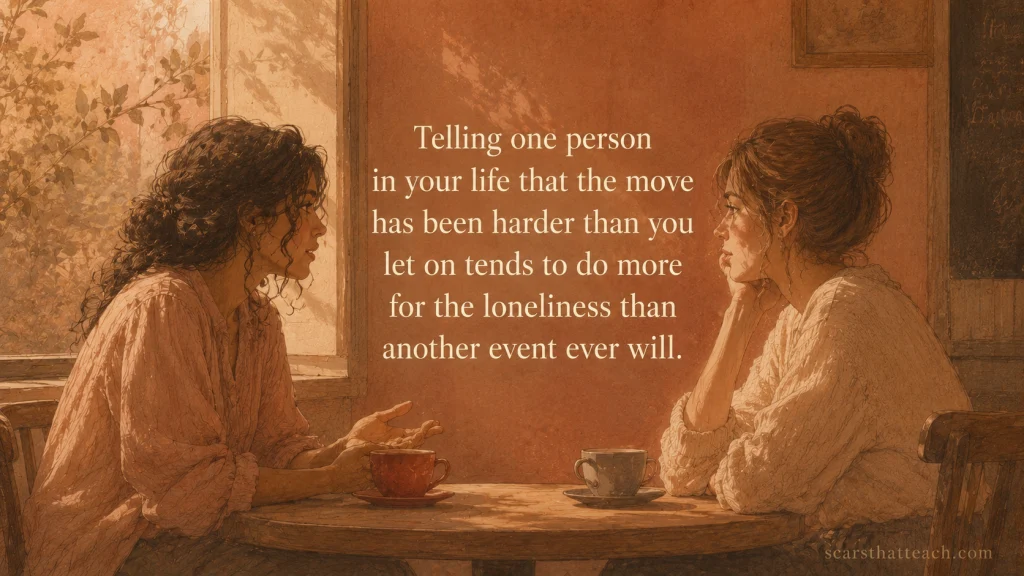
None of this means the standard advice is useless. Going to events and saying yes to invitations still matters, because new relationships cannot form in a vacuum. What changes the experience is doing those things while also being honest about what is happening underneath them. Telling one person in your life, old friend or new acquaintance, that the move has been harder than you let on tends to do more for the loneliness than another event ever will, because it replaces the performance of being fine with something closer to the truth.
Staying in touch with the people from your old life while also genuinely investing in the new one is not disloyalty. It is the realistic way most people end up feeling at home somewhere new, by carrying both rather than forcing yourself to choose. If you find yourself thinking carefully about which people from your old life are actually worth the effort of maintaining across distance, words on what certain kinds of people take from you may clarify some of that in a roundabout way.
If the loneliness you are carrying does not seem tied to this move specifically, and instead feels like something that has followed you across more than one place or more than one set of friends, that may point to a different pattern worth looking at on its own, since feeling lonely even with people around you often has different roots than the loneliness of a recent relocation.

Final Thoughts: You Are Allowed to Miss What You Built Before
The man who never finished unpacking was not failing to adjust. He was carrying something real, a life he had built more than once and then left behind more than once, and nobody had ever told him that missing it was allowed. If you are lonely after a move, you are not behind some schedule everyone else is keeping. You are doing the slow, unglamorous work of building a second life on top of the first one, and that takes longer than any list of networking tips will tell you. For other reflections on what it means to feel unseen even in a crowd, the wider conversation around feeling lonely covers some of that ground from different angles.
FAQs
📦 Why do I feel so lonely after moving even though I am meeting new people?
Meeting new people fills a calendar, not a history. The loneliness usually comes from missing the depth of relationships that took years to build, which new acquaintances have not had time to reach yet.
⏳ How long does it normally take to feel settled in a new city?
There is no fixed timeline, but most people underestimate it. Expecting new friendships to feel established within a few months is usually the source of the disappointment, not a sign that anything is going wrong.
🎭 Why do I keep telling everyone the move is going great when it is not?
Admitting loneliness can feel like admitting failure, so many people perform contentment instead. Being honest with even one person tends to ease the loneliness far more than keeping up the performance does.
🤝 Is it disloyal to my old friends to make close new ones?
No. Staying close to old friends while building new ones is not a betrayal of either. Most people who feel at home somewhere new have learned to carry both rather than choosing one over the other.
🧭 What if I have felt lonely in every city I have lived in, not just this one?
That pattern may point to something other than the move itself. Loneliness that follows you across different places and different friend groups often has different roots than the loneliness tied to a recent relocation.