There is a kind of punishment that outlasts every other kind, the one a person decides on themselves and keeps applying long after it has stopped serving any purpose. If you want to know how to stop punishing yourself, the real obstacle usually is not a lack of self-compassion. It is a belief that suffering is the only proof you still care about what you did. This piece looks at why that belief takes hold, what it actually protects, and what can replace it without letting yourself off the hook entirely.
The Punishment Nobody Else Is Inflicting
In twenty years of sitting with people near the end of their lives, I came to notice something that surprised me every time, even after I had seen it dozens of times before. The harshest sentence a person ever served was rarely handed down by anyone else. It was the one they wrote for themselves, usually within days of whatever they had done, and then kept renewing for years, sometimes decades, after the original event had stopped having any power to change.
If you are trying to figure out how to stop punishing yourself, the place to start is not a list of self-compassion exercises. Those have their place, but they tend to fail quietly when the real engine underneath the punishment is left untouched. The engine is a belief, rarely spoken out loud, that goes something like this: if I stop suffering for what I did, I have stopped caring about it. Until that belief is named and examined, the punishment will keep finding new ways to renew itself.
Why the Pattern Outlives Its Own Purpose
Self-punishment has a function when it first appears. It sharpens attention on a mistake, it makes the consequences feel real, and for a short window it can genuinely shape better behavior afterward. The trouble is that most people never set an end point for it. There is no moment where they decide the lesson has been learned and the suffering can stop, because stopping feels like letting themselves off the hook. So the pattern keeps running on a kind of autopilot long after the learning part of it has finished its work.
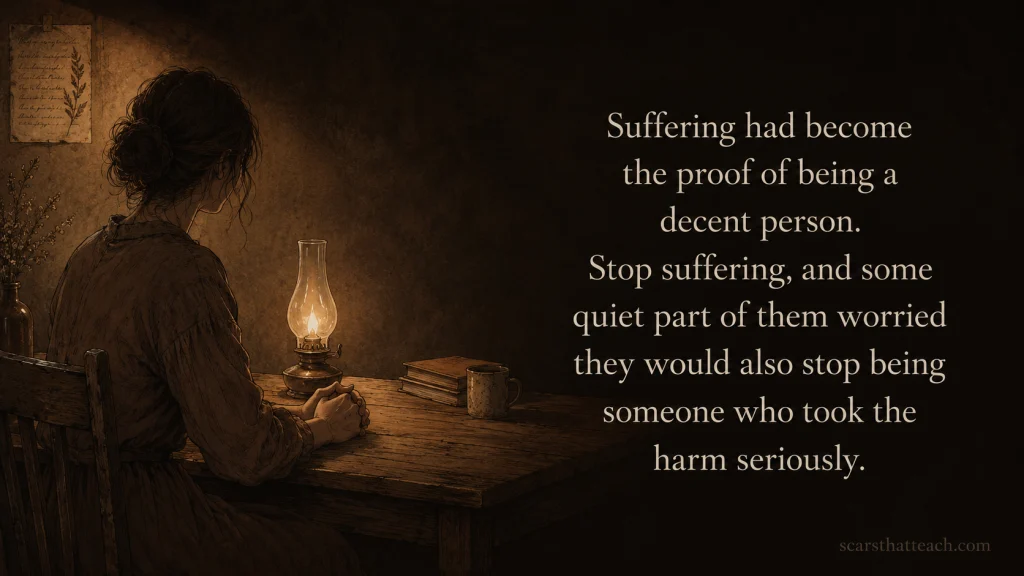
What I noticed, more times than I can count, is that the people who struggled longest with this were not the ones who had done the worst things. They were the ones who had attached a moral identity to the punishment itself. Suffering had become the proof of being a decent person. Stop suffering, and some quiet part of them worried they would also stop being someone who took the harm seriously. That fear is rarely examined directly, which is exactly why it survives so long.
When Self-Punishment Turns Into Rumination
There is a difference between feeling appropriate remorse and rehearsing the same scene on a loop for years. The second one is not remorse anymore. It is rumination wearing remorse as a disguise, and it almost never produces anything new. The same memory gets replayed, the same conclusion gets reached, and nothing changes except the amount of life spent inside that loop instead of outside it.
Most people do not punish themselves to make things right. They punish themselves because stopping feels like proof they never cared.
What People Usually Get Wrong About Letting Go
The most common mistake I have watched people make is treating self-forgiveness and self-punishment as the only two options on the table. Either you keep punishing yourself, or you forgive yourself and move on as if nothing happened. Framed that way, punishment looks like the more responsible choice every time, because moving on sounds like forgetting. That is a false choice, and it is the reason so many people stay stuck in a pattern that has stopped helping anyone, including the person they hurt.
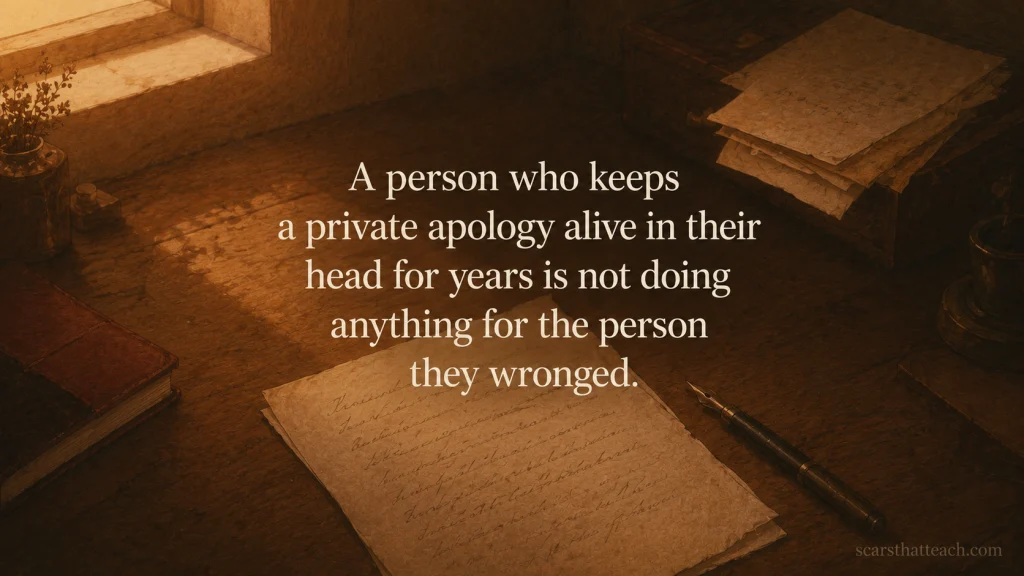
The honest alternative is not forgetting. It is replacing the suffering with something that still expresses accountability, just without the self-harm attached to it. A person who keeps a private apology alive in their head for years is not doing anything for the person they wronged. A person who finds one concrete way to act differently, or to make some form of amends where that is possible, is doing something the punishment never managed to do.
- You replay the same memory on a loop without it leading anywhere new.
- You feel guilty for moments of ordinary happiness, as if you have not earned the right to feel good.
- You quietly believe that forgiving yourself would mean the harm did not matter.
- You have never set any condition under which the punishment would be considered complete.
- You measure how sorry you are by how much you suffer, rather than by what you do differently now.
If two or three of those sound familiar, the pattern has probably outlived whatever purpose it once served.
A Different Way to Stay Accountable
A man I sat with once, well into his seventies, spent the better part of three decades convinced that grieving a friendship he had ended badly was the only respectable response. He told me, near the end, that he had never once considered writing the friend a letter, even one he never sent, because some part of him believed that doing anything constructive would have meant the friendship had not mattered enough to deserve ongoing penance. By the time he reconsidered that belief, the friend had been gone for years. The suffering had outlived any chance of repair, and that was the regret he carried instead.
That story is the clearest version of something I have seen in smaller forms many times since. The work is not to stop caring. It is to redirect what caring looks like, away from an unending internal sentence and toward something that actually does something, even if the something is small. That might mean a real apology where one is still possible. It might mean changing a specific behavior that caused the original harm. It might mean simply deciding, deliberately, that a fixed amount of reflection has been enough, and choosing to act differently going forward instead of replaying the past on a loop.
When Your Specific Situation Changes the Answer
None of this applies the same way in every case. If what you are carrying involves an ongoing relationship you can still repair, the path looks different than if the person involved is gone, or the harm cannot realistically be undone. What I have observed across many situations does not replace knowing the actual people and history involved, which only you have access to. The frame here is meant to loosen the grip of the pattern, not to tell you exactly what to do next.
Final Thoughts: Suffering Was Never the Point
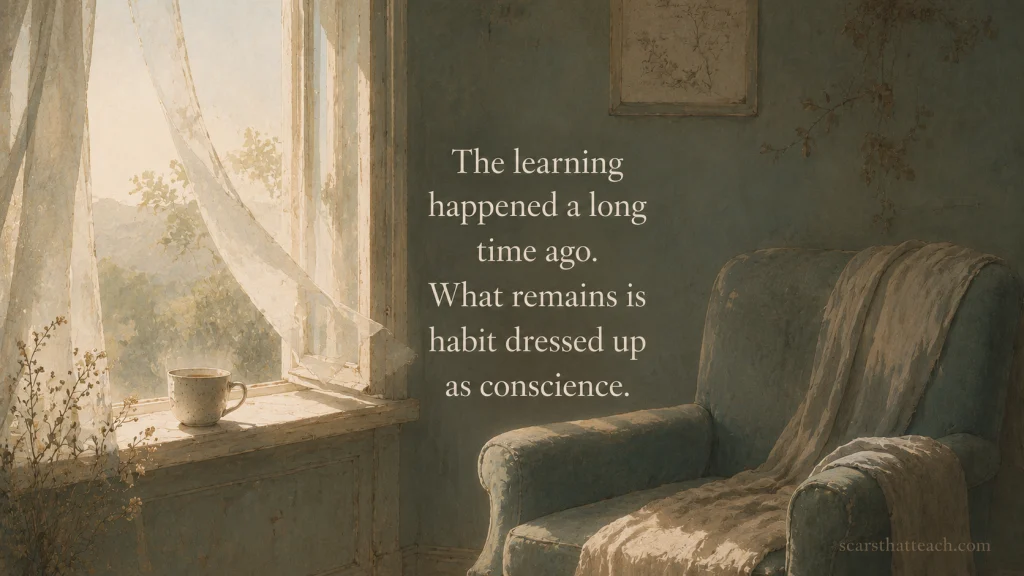
If you have spent years treating suffering as the price of admission for being someone who takes responsibility, it might be worth asking what that suffering has actually accomplished lately. Most of the time, the honest answer is nothing new. The learning happened a long time ago. What remains is habit dressed up as conscience. Understanding why self-forgiveness feels so difficult in the first place can make it easier to see that stopping the punishment is not the same as deciding the harm did not matter. It never was.
For a broader look at how people carry failure without letting it define them, the reflections in how people make peace with their failures cover some of the same ground from a different angle.
FAQs
🔁 Why do I keep punishing myself for something I already apologized for?
Because part of you has tied the apology to ongoing suffering rather than to the act of taking responsibility itself. The apology already did its job. The suffering afterward is usually habit, not evidence of sincerity.
🧠 Is self-punishment the same thing as guilt?
Not quite. Guilt is a response to something specific you did. Self-punishment is what happens when that response keeps running long after it has anything new to teach you, often turning into rumination rather than reflection.
💭 How do I know when I have suffered enough over something?
There is no universal number, but a useful sign is whether continuing to suffer is producing anything new. If the same thoughts loop without leading to different action, the suffering has likely stopped serving its purpose.
🤝 What can I do instead of punishing myself?
Look for one concrete action that expresses accountability without harming you further, an honest apology where it is still possible, a changed behavior, or a deliberate decision to stop replaying the past and act differently now.
⚠️ When does self-punishment need professional help?
If the pattern involves persistent depression, severe self-criticism, or any form of self-harm, that goes beyond what reflection alone can address, and it is worth speaking with a mental health professional who can look at your specific situation directly.