Fake friends rarely announce themselves with a single dramatic betrayal. They reveal themselves slowly, through who shows up when things get hard and who only ever showed up when things were easy. I spent two decades watching who actually sat at a bedside and who had quietly disappeared long before anyone got sick. This piece is not another list of signs of a fake friend. It is a way to recognize the specific shape of what you are dealing with, so you can stop trying to fix something that was never built to hold weight in the first place.

Who Shows Up at the End Tells You Who Was Real
I have sat at more bedsides than I can count, and I noticed something early on that never stopped being true. The people crowding a hospital room in the final weeks were almost never the people who had been loudest in the good years. Sometimes it was a neighbor who barely spoke at the funeral. Sometimes it was a coworker nobody expected. And sometimes, painfully, it was nobody at all from a friend group someone had spent decades calling close. Fake friends are not identified by a checklist. They are identified by what happens when there is nothing left to gain from showing up.
That is the real difference between genuine friendship and its imitation. Genuine friendship has reciprocity built into it, even when it is uneven in any given month. It has presence during the hard stretches, not just the fun ones. It has a kind of consistency that does not depend on whether you are useful, entertaining, or currently doing well. Fake friendship can look identical to the real thing for years, right up until the moment it is tested. That is what makes it so hard to spot from the inside while you are living it.
Why a Generic List of Signs Misses the Point
If you search for signs of a fake friend right now, you will find the same list repeated with minor variations. They cancel plans. They only talk about themselves. They disappear when you need them. All of that is true, and none of it tells you what to actually do once you recognize your own situation in it. The problem is not that people cannot identify a fake friend in the abstract. The problem is that the specific shape of the friendship they are stuck in does not match any single item on the list, and they do not know which direction to go next.
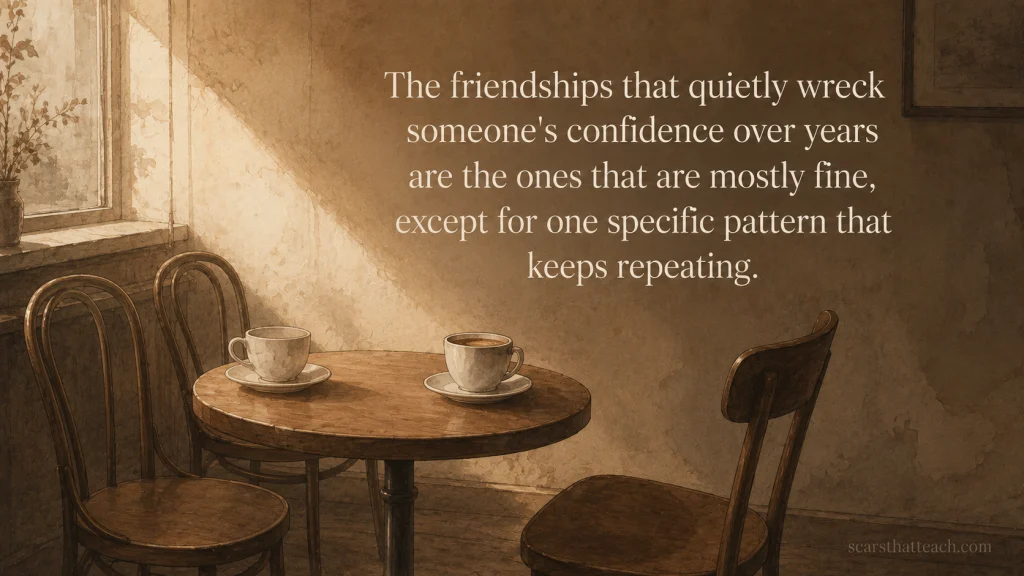
I have noticed that the friendships people struggle with most are rarely the obviously bad ones. Nobody needs help recognizing a friend who steals from them or humiliates them in public. The friendships that quietly wreck someone’s confidence over years are the ones that are mostly fine, except for one specific pattern that keeps repeating. Maybe it is a friend who is warm in private and cold in front of others. Maybe it is someone who only calls when they need something, and is otherwise unreachable. Maybe it is the slow realization that an entire group has started leaving you out of plans nobody bothered to mention. Each of those is a different problem with a different shape, and each deserves to be looked at on its own terms instead of buried inside a list of eighteen generic warning signs.
Find the Pattern That Matches What You Are Actually Living Through
Instead of working through another undifferentiated list, it helps to ask a more specific question: what is the actual texture of the problem in front of you. Some of the most common shapes I have seen people describe to me, in different words but with the same underlying ache, fall into a few recognizable categories.
- A friend who is warm to your face and undermines you the moment you are not in the room, which is closer to a frenemy dynamic than an obvious enemy.
- A friend who was constant during an easy season and vanished the moment things got difficult, which has a name of its own as a fair weather friend.
- A friendship where you are always the one calling, planning, and remembering, while the effort is never returned, which is the territory of a one sided friendship.
- A friendship you already know is not working, but you do not know how to step back from without guilt or conflict, which is exactly what it means to end a toxic friendship.
- A connection that exists almost entirely online, leaving you unsure if it counts as real friendship at all, which is worth sitting with directly when asking whether social media friends are real friends.
- A group you used to belong to that has quietly started excluding you from plans, conversations, and inside jokes, a specific kind of ache covered when feeling left out by your friend group.
- A friend who only reappears the moment they need a favor, a ride, or a place to vent, and disappears again right after, which is its own recognizable pattern when a friend only reaches out when they need something.
None of these patterns are mutually exclusive. You may recognize pieces of two or three of them in the same friendship. That is normal. People are rarely one clean archetype. What matters is identifying which pattern is doing the most damage right now, because that is the one worth understanding more deeply before you decide what to do about it.
The Mistake Almost Everyone Makes While Sorting This Out
The most common mistake I have seen people make is trying to resolve the question of whether a friend is fake before they have actually named the specific behavior causing the pain. They spend months in a kind of low grade suspicion, replaying conversations and looking for proof, without ever sitting down and asking themselves plainly: what exactly is this person doing, and how often. That question feels almost too simple to be useful, which is exactly why people skip it.
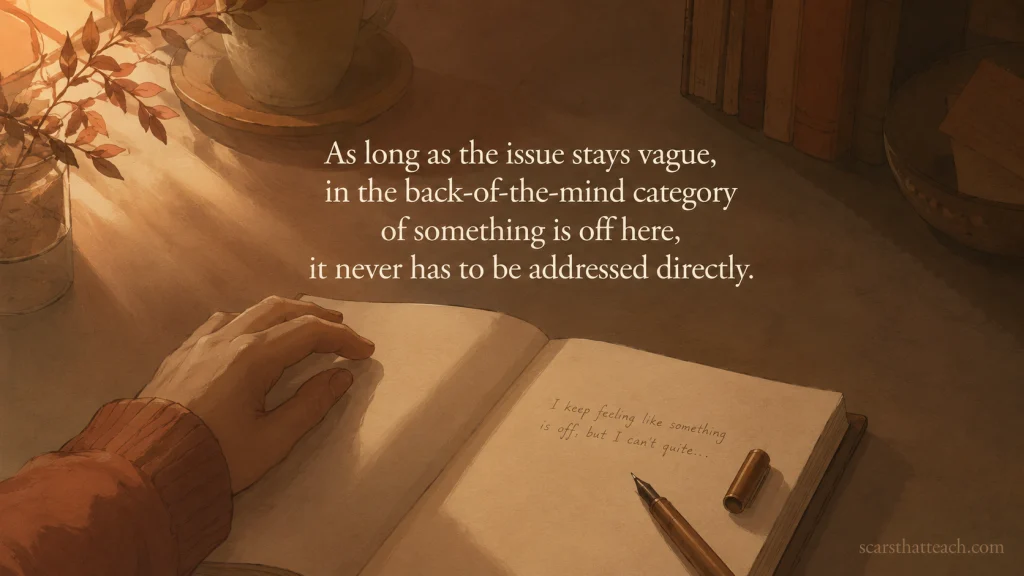
This happens for an understandable reason. Naming the specific behavior makes the problem concrete, and concrete problems demand a response. As long as the issue stays vague, sitting at the back of the mind as a low-grade suspicion, it never has to be addressed directly. I have watched people stay in friendships for years longer than they wanted to, simply because they never let themselves get specific enough to see what they were actually tolerating. A clearer path starts with writing down, even privately, the exact pattern you keep encountering. Once it has a name, it stops being a feeling you cannot quite justify and becomes something you can actually evaluate.
What You Can Actually Trust About a Friendship
There is a pattern I saw often enough in families and caregiving relationships to stop calling it a coincidence, and it applies just as well to friendship. People who had spent years quietly managing someone else’s moods, excuses, or convenience rarely named the imbalance clearly until they were exhausted past the point of caring how the conversation would land. By then, the friendship had already cost them more than they realized at the time. The earlier version of that same dynamic shows up constantly in friend groups, just at a lower volume. You make space for someone’s unreliability for so long that it stops registering as unreliability at all. It just becomes how that friendship works.
What you can trust, instead of trying to settle the question of whether someone is technically a fake friend, is your own honest accounting of how a friendship has actually behaved over time, not how it talks about itself. Genuine friendship does not require you to constantly explain away its absence. It does not need you to lower your expectations every year just to keep believing in it. If you find yourself defending a friendship to people who only know what you have told them, and quietly excusing things to yourself that you would never excuse on someone else’s behalf, that gap between the story and the behavior is usually where the real answer is sitting.
Final Thoughts: You Do Not Owe Every Friendship a Verdict Today
You do not have to decide today whether a particular friend is fake, fading, or just going through something themselves. What you do owe yourself is honesty about the pattern you keep living through, because that pattern, more than any single incident, is what tells you whether this friendship can hold weight when it actually matters. Some friendships are worth a direct conversation. Some are worth quietly stepping back from without ceremony. Neither choice makes you cold, and neither one is owed to every friendship just because it has lasted a long time.
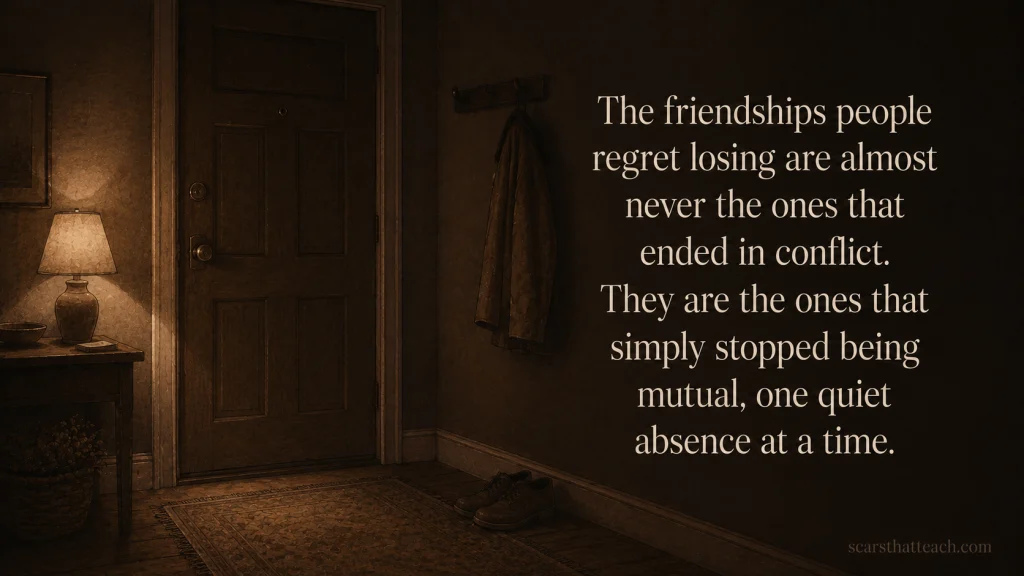
If there is one thing two decades of watching people reckon with their relationships has taught me, it is that the friendships people regret losing are almost never the ones that ended in conflict. They are the ones that simply stopped being mutual, one quiet absence at a time, until neither person noticed the moment it happened. Pay attention to the pattern now, while you still have the chance to do something about it, instead of finding out at the end what was actually there all along. If this kind of disappointment shows up in more than one relationship in your life, it may be worth sitting with the broader collection of toxic people quotes that speak to that wider pattern.
FAQs
🔍 What are the most common signs of a fake friend?
The clearest sign is inconsistency between how someone treats you when things are easy versus when you actually need support. A fake friend is reliably present for convenience and unreliably present for anything that costs them time, comfort, or effort.
🧩 How do you spot a fake friend before you get hurt?
Watch behavior over time rather than words in any single conversation. Someone’s actions during a hard month tell you more about the friendship than anything they say when things are calm.
👥 Are there different types of fake friends?
Yes. The pattern can look like someone who is warm to your face and unkind behind your back, someone who disappears during hardship, or someone who only resurfaces when they need a favor. The right response depends on which specific pattern you are actually facing.
💭 Can a fake friend become a real one over time?
It is possible, but it requires a real change in behavior over time, not just an apology or a better month. Watch for consistency across several difficult moments before deciding the pattern has genuinely shifted.
🛑 Is it normal to feel guilty for thinking a friend might be fake?
It is common, but guilt is not evidence that you are wrong. Noticing a pattern honestly is not the same as betraying someone. It is simply paying attention to what a friendship has actually shown you.