Savoring ordinary moments is not a mindfulness technique or a wellness practice. It is something quieter, and most of what gets written about it manages to make it harder than it needs to be. This piece covers what savoring actually is, what tends to pull a person out of a good moment without their noticing, and why the habit itself is smaller than it sounds.
The Skill That Looks Like Almost Nothing
The most useful thing I noticed over twenty years of hospice work was not about dying. It was about attention.
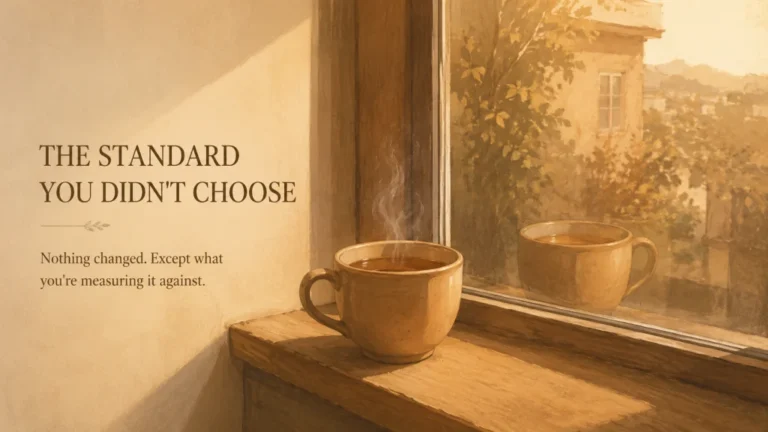
Some people had learned, without anyone teaching them, to slow down inside a good moment. Not to hold onto it, not to document it or announce it or make anything of it. Just to be actually present in it while it was still happening. I saw this in certain patients, in certain family members during long afternoons in those rooms. It never looked dramatic. It looked like someone sitting with a cup of coffee without reaching for their phone. It looked like a person pausing mid-conversation to say, with genuine pleasure rather than sentiment: this is a good afternoon. From the outside, it looked like almost nothing.
What I also noticed is that the people who had this quality tended to carry the harder stretches with more steadiness than those who did not. Not because positive thinking insulates anyone from difficulty. It does not. But a person who has genuinely inhabited good moments has something to draw on when things are hard. The interior life is more populated. There is more to return to.
I came across the research on this years into the work, after watching the pattern in enough rooms to trust it. What researchers call savoring, the practice of deliberately attending to a positive experience long enough for it to actually register, describes something many of those people had found on their own. The word is more clinical than the thing it names. But the concept holds.
What Savoring Is, and What It Is Not
Savoring has been studied as a component of what makes happiness durable rather than merely momentary. The basic finding is this: people who take time to consciously appreciate a positive experience, to notice its specific qualities rather than letting it pass unremarked, tend to get more lasting benefit from it than people who move through the same experience without pausing. The positive affect lasts longer. The memory of it is more detailed and accessible later.
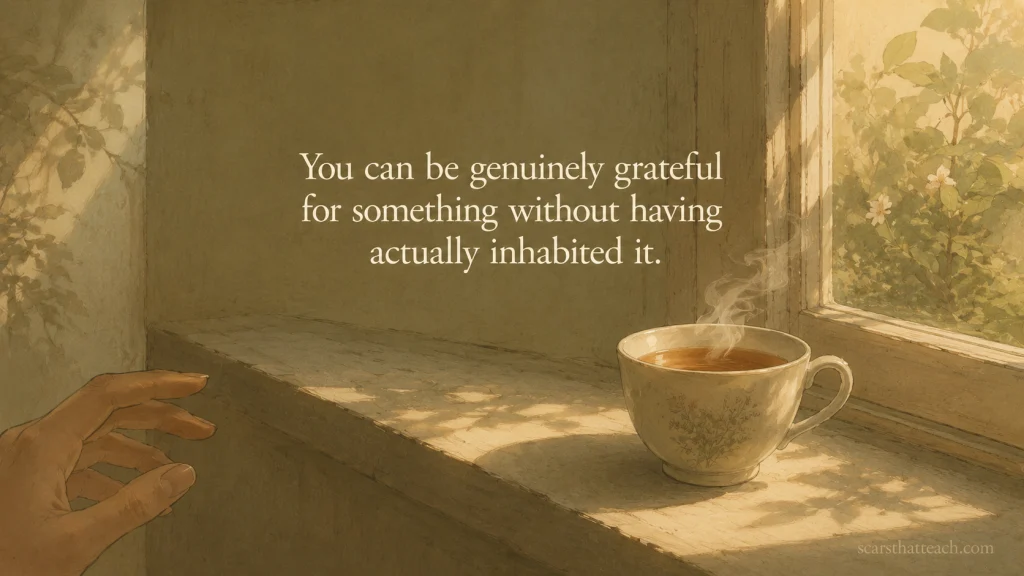
It is worth being clear about what savoring is distinct from. Savoring is not the same as gratitude. Gratitude is about recognition, about acknowledging what you have or what has been given to you. Savoring is about duration, about staying inside a good experience rather than noting it and moving on. You can be genuinely grateful for something without having actually inhabited it. You can feel thankful for a good conversation that you were only half-present for. Savoring requires the presence that gratitude can exist without.
It is also not mindfulness in the formal sense. Mindfulness practice involves a particular relationship to the present moment that takes time to develop and has its own demands. Savoring does not require any of that. It requires only that you not immediately move away from something good before it has registered. That is a lower bar than it might sound, and it is the right bar. The moment it starts to feel like something you have to achieve a particular state to do, it has already become something else.
The savoring psychology research, particularly in Sonja Lyubomirsky’s work on intentional activity, situates this kind of deliberate attention to positive experience as one of the more reliable contributors to sustained wellbeing, precisely because it is self-reinforcing. The more often a person genuinely inhabits good moments, the more accessible the habit becomes. It does not deplete the way effort-based practices tend to. It compounds.
Why Most Advice on This Turns It Into a Task
The common failure in writing about savoring is that it immediately becomes another item on a wellness list. You are told to journal about the experience, or to name three specific details, or to share it with someone while it is still fresh. All of these things can be fine. None of them are savoring. They are what savoring gets turned into when the goal becomes demonstrating that you are doing it rather than actually doing it.
The other common failure is advice that amounts to just be present, offered without any explanation of what moves a person toward or away from that. Technically accurate. Not useful to anyone who is not already doing it.
What tends to disrupt a good moment, in my observation, is one of a few specific things:
- Anticipating its end. Thinking about how the moment will soon be over, or about what comes next, moves attention out of the experience and into evaluation of it. The moment is still happening, but you have already left.
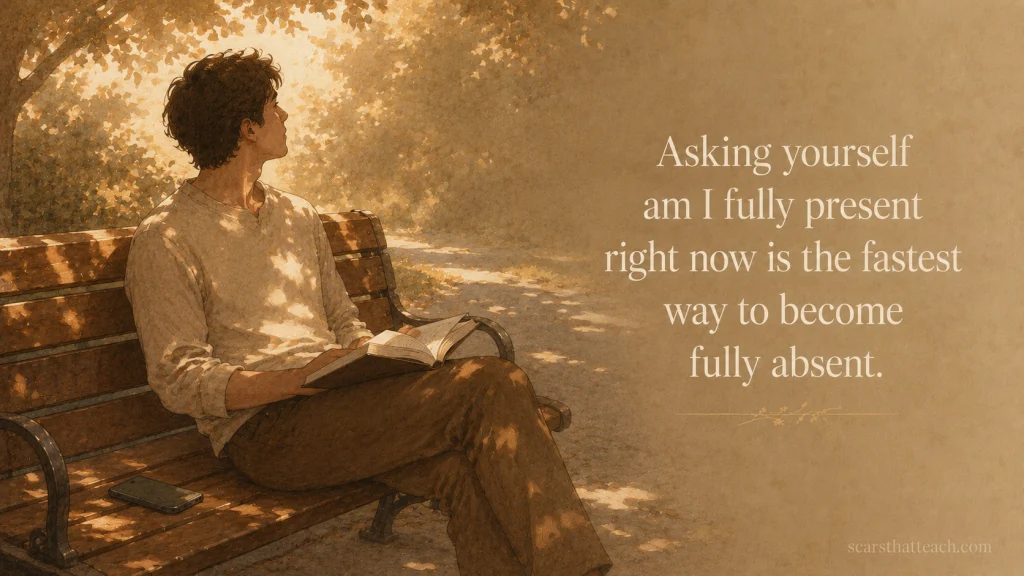
- Assessing whether you are appreciating it correctly. Asking yourself am I fully present right now is the fastest way to become fully absent. The self-monitoring undoes what it is trying to monitor.
- Narrating it in anticipation of sharing it. Composing the story, thinking about how you will describe it later, frames the experience as content rather than as something being lived. You become a spectator of your own moment.
- Comparing it to a better version. This coffee is good, but it was better last week. This walk is pleasant, but the light was better yesterday. Comparative evaluation puts the present experience in competition with a memory, and the present moment rarely wins that comparison.
None of these are moral failures. They are habits of mind that pull attention somewhere other than where the good thing is actually happening. Recognizing them is more useful than trying to suppress them, which is itself another form of working too hard at the wrong thing. If you notice you have already moved on from a good moment, you can simply move back. That is available as many times as you need it.
What It Actually Looks Like When It Is Working
The version of savoring that compounds over time is not effortful. It looks like a small extension of attention, a slight slowing that happens so naturally the person doing it is barely aware of it as a practice. Research on attention-directed appreciation suggests this kind of sustained noticing works partly by disrupting hedonic adaptation. Paying deliberate attention to the specific qualities of something ordinary, the exact warmth of an afternoon, the texture of a conversation that is going well, the particular weight of a quiet room, keeps the brain from filing it away as background.
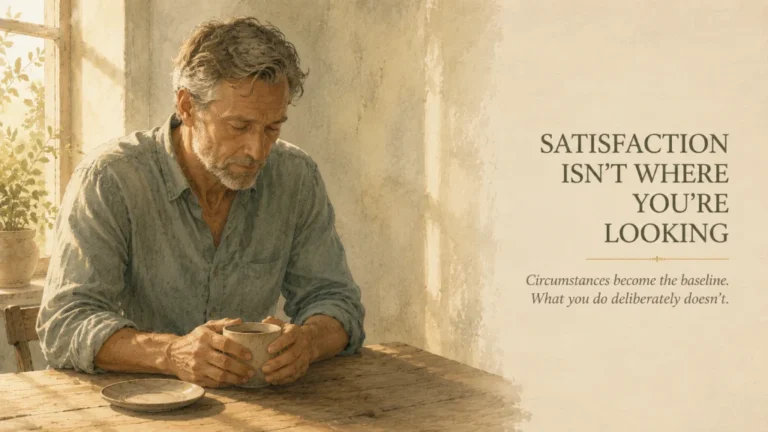
The tendency to stop noticing the good things that are regularly present is one of the more honest explanations for why happiness and circumstances have such a complicated relationship. More does not automatically produce more appreciation. Familiarity tends toward invisibility. The correction is not more things. It is more attention to what is already there, held just long enough to actually register.
Most people who have genuinely learned to appreciate ordinary life are not doing anything that looks like a practice. A man who can describe exactly how a particular stretch of his morning walk feels underfoot, or a woman who can recall the specific quality of light on a Tuesday afternoon in her kitchen, is simply someone who has not made a habit of immediately moving on. I sat with enough people in those final weeks to notice that the ones who could name small pleasures with real specificity, not grand experiences but ordinary ones, tended to have a different quality in the room. A more inhabited quality. Something in how they spoke about their life that was particular rather than general. What those people seemed to have, somewhere along the way, was language for the things that mattered to them. Small, exact words for small, exact things. That is part of what the right quote about ordinary life tends to do when it lands: it names something you have already been experiencing but could not quite hold, and the naming makes the thing more available going forward.
Savoring does not require a formal practice. What it requires is simpler: when something good is happening, give it one more beat before moving to the next thing. Not marking the occasion. Not holding on. Just letting it land before you go.
Final Thoughts: The Habit Is Smaller Than It Sounds
What I have observed, both in those hospice rooms and in my own life since leaving them, is that the people who seem to accumulate genuine satisfaction over time are almost never the ones working hardest at happiness. They are the ones who have developed small habits of attention, so ingrained they barely register as habits at all.
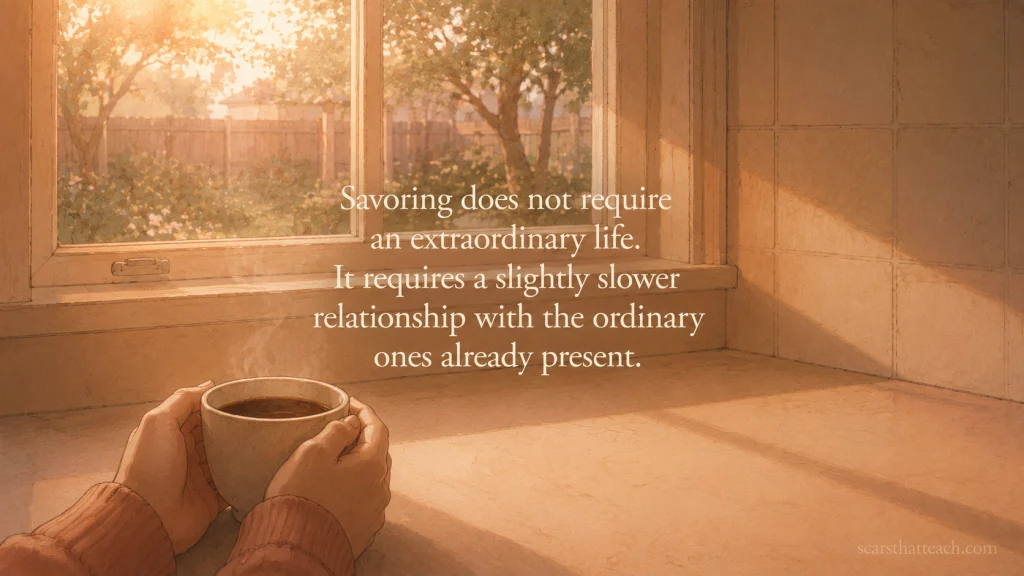
Savoring does not require an extraordinary life or extraordinary experiences. It requires a slightly slower relationship with the ordinary ones already present. The meal that turned out better than expected. The conversation that goes somewhere real. The afternoon that ended up being a good one without any particular reason. Most of these things are available more often than we give them credit for. They just move past faster than they need to.
If the question underneath this is broader, about where genuine satisfaction comes from and what actually sustains it across an ordinary life, the other pieces on finding joy in small things take that question apart from different angles.
FAQs
☕ What does it mean to savor ordinary moments?
Savoring is the practice of staying with a positive experience long enough for it to fully register, rather than moving past it before it has a chance to land. It does not require a meditative state or any particular technique. It just requires not immediately moving on from something good before you have actually been in it.
🧠 Is savoring the same as mindfulness or gratitude?
Neither. Gratitude is about acknowledgment, recognizing what you have or what has been given. Mindfulness is a broader practice with its own demands. Savoring is specifically about duration: staying inside a positive experience rather than noting it and moving on. You do not need a mindfulness practice to savor. You need the habit of not immediately moving away from something good.
😬 Why does trying to savor a moment sometimes make it feel worse?
Because the effort to appreciate something correctly shifts attention from the experience to the evaluation of whether you are doing it right. That self-monitoring pulls you out of the thing you were trying to be in. The more you try to perform appreciation, the less of the original experience is left to appreciate.
🌅 What are examples of ordinary moments worth savoring?
The ones that tend to get overlooked most: morning coffee before the day starts properly, a conversation that goes somewhere unexpected, a moment when the light in a room is particularly good, a meal that is better than expected. None of these are extraordinary. They are ordinary in the specific sense that makes them easy to move past without noticing.
🔄 Does savoring actually make a difference over time?
The research suggests it does, and the mechanism is not complicated. Positive experiences that are genuinely inhabited rather than merely passed through produce more durable benefit. The effect compounds because the habit of attending to good moments tends to make similar moments more noticeable in the future. It is less about generating more good things and more about not letting the existing ones pass unregistered.