How to make amends when sorry isn’t enough starts with understanding that an apology and amends are not the same thing, even though most people use the words as if they were. An apology says you are sorry. Amends are what you do about it. This piece looks at why the words alone often fail to settle anything, and what amends can look like even when the person you owe them to is gone, unreachable, or unwilling to hear from you again.

Why the Right Words Were Never Going to Be Enough
Over two decades of sitting with people near the end of their lives, I noticed something that took me longer than it should have to name clearly. The people who eventually found a way to live with what they had done were almost never the ones who had finally found the perfect words for it. They were the ones who had found something to do that was bigger than the words. The apology mattered to them, but it was never the thing that settled anything on its own.
If you have already apologized, genuinely, and the guilt has not moved an inch, that is not a sign you said it wrong. It is a sign that an apology was only ever the first part of a two-part task, and the second part, the part that actually does the work, is amends. The two get treated as interchangeable so often that most people never realize they are missing the second half of what it actually takes to forgive yourself entirely.

The Difference Between Saying Sorry and Making It Right
An apology is a statement. It acknowledges what happened and expresses remorse for it, and a sincere one does real work in a relationship, especially in the moment right after harm has occurred. What an apology does not do, by itself, is address the actual damage. It does not return the time someone lost, repair the trust that broke, or undo the specific consequence of what you did. That is the job amends are supposed to do, and it is a different job entirely.
Amends are an action, not a sentence. They take the form of something concrete: paying back what was taken, showing up consistently where you previously failed to, changing the exact behavior that caused the harm in the first place. The distinction sounds obvious once it is named, which is part of why it gets skipped over so often. People apologize, feel the relief of having said something honest, and assume the relief means the work is finished.
An apology tells someone you understand what you did. Amends are what tell them, eventually, that you meant it.
What Amends Look Like When Direct Repair Is Not Possible
The hardest version of this question comes from people whose path to direct amends has closed. The person they owe something to has died, has chosen no contact, or has made it clear they want nothing further from you. In those situations, the instinct is often to assume amends are no longer possible, and to settle back into carrying the guilt indefinitely because there is, apparently, nothing left to do about it.
That assumption is not quite right. When direct repair is impossible, amends can take an indirect form, and the form still counts. Contributing to a cause related to the harm you caused, fulfilling an obligation you once failed at, even with different people now, or permanently changing the pattern of behavior that did the damage in the first place are all genuine forms of amends. They do not require the original person’s presence or permission to be real.
What You Cannot Control, and What You Still Can
You cannot control whether an apology gets accepted. You cannot control whether the person you hurt ever decides you have done enough, or whether they decide that nothing would be enough. What you can control is whether you take the action amends require. Carrying guilt long after it has stopped serving any purpose is often what fills the space where amends should have gone instead, and it rarely accomplishes what amends actually can.
What People Commonly Get Wrong About Making Amends
I sat with someone once who had written a long letter of amends to a sibling who never wrote back, not once, before that sibling passed away years later. He never knew whether it had landed. He had still done the thing. That detail has stayed with me longer than almost anything else from those years, because it answers the question most people are quietly asking when they make amends: whether it counts if no one acknowledges it. It does. The most common mistake is waiting for the other person’s response to determine whether the amends counted, and when that sign never comes, concluding that what was done must not have mattered.
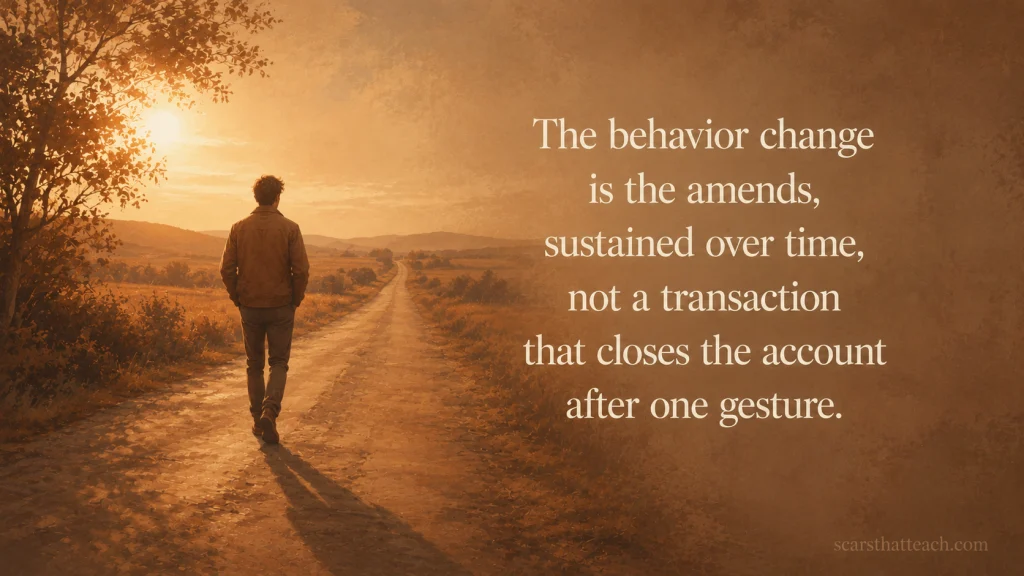
The second mistake is treating amends as a single event rather than an ongoing pattern. A person who pays back what they took once, but returns to the same behavior that caused the original harm, has not actually made amends in any lasting sense. The behavior change is the amends, sustained over time, not a transaction that closes the account after one gesture.
- You have apologized more than once for the same thing, hoping a better version of the words would finally land.
- You feel the guilt has not moved despite the apology being sincere.
- You assume amends are impossible because the person is gone or will not speak to you.
- You are waiting for some sign of forgiveness before deciding whether to act differently going forward.
- You have apologized but never actually changed the specific behavior that caused the harm.

Final Thoughts: The Words Were Only Ever the Beginning
The people I watched find some real peace near the end of their lives were rarely the ones who had perfected an apology. They were the ones who had done something about what they carried, often quietly, often without anyone close to them ever fully knowing about it. If sorry has not been enough, it was never supposed to be. Working through what it takes to forgive yourself for past mistakes tends to run alongside this question rather than ahead of it, since amends and self-forgiveness usually move together. For a broader look at carrying failure without letting it define you, how people make peace with their failures covers some of that ground from a different angle.
FAQs
🗣️ What is the actual difference between an apology and amends?
An apology is a statement of remorse for what happened. Amends are the action that addresses the actual damage, like changed behavior or some form of repair. They work together but are not the same thing.
🚪 Can I make amends if the person will not talk to me anymore?
Yes, in an indirect form. You cannot force direct repair if someone has chosen no contact, but you can still change the behavior that caused the harm or take action related to the damage you caused.
💔 What if the person I need to make amends to has died?
Direct amends are no longer possible, but indirect amends still are, things like fulfilling an obligation you once failed at or contributing to a cause connected to the harm done.
⏳ Why do I still feel guilty even after apologizing sincerely?
An apology alone often does not address the actual damage caused. The guilt tends to ease only once some reparative action follows the words, not from the words being repeated or refined.
🎯 Does making amends guarantee the relationship will be restored?
No, and it was never meant to. Amends are an action you can take regardless of how the other person responds. Whether the relationship recovers is something you cannot control either way.