Thinking about your own mortality is something most people spend a remarkable amount of energy avoiding, and that avoidance has a cost most people never see clearly. Research on mortality awareness suggests the effect is not as one-sided as it is usually made out to be: it can sharpen fear, but it can also clarify what actually matters, depending on how a person engages with it. This piece looks at why we avoid thinking about death in the first place, what conscious engagement with mortality has been shown to do, and what twenty years at the bedside taught one chaplain about holding it without being held by it.
The People Who Seemed Most Settled Were Not the Ones Who Avoided It
In twenty years at the bedside, I noticed something that ran against what I expected when I started that work. The people who seemed most settled in themselves, the ones whose presence in a room felt steady rather than anxious, were almost never the ones who had managed to avoid thinking about death the longest. They were the ones who had found a way to hold it without being held by it. Mortality had a place in how they thought about their lives, but it was not running the show.
That distinction matters more than it sounds. Thinking about your own mortality does not automatically make someone fearful, and avoiding the thought does not automatically make someone at peace. What actually determines the difference has less to do with whether the thought shows up and more to do with what a person does with it once it does.
Why Most People Avoid Thinking About Death at All
There is a body of research, built on work the psychologist Ernest Becker did in the early 1970s, that gives a name to this avoidance: terror management theory. The basic idea is that human awareness of our own mortality generates a particular kind of existential anxiety, and that people manage that anxiety through cultural worldviews, self-esteem, and various pursuits of symbolic permanence, the things people build or believe in that feel like they will outlast a single human lifespan. Decades of research following that original idea have looked at how people behave differently when mortality is made salient to them, even briefly.
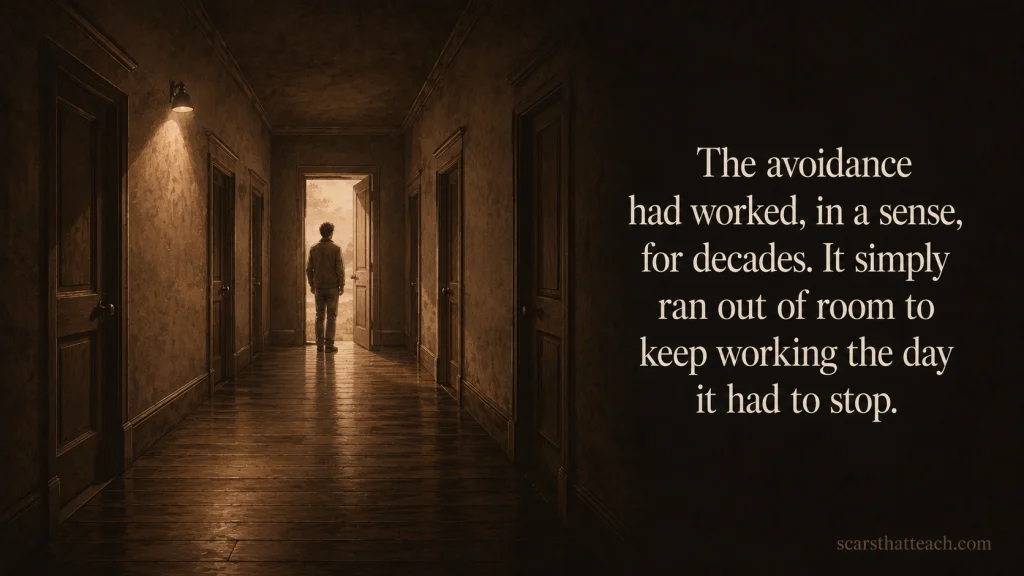
What I noticed at the bedside lines up with that research more than I expected when I first encountered it. The families who struggled hardest in those rooms were often the ones who had spent a lifetime organizing their thoughts around not thinking about this moment at all, so that when it finally arrived, uninvited and unavoidable, they had no practiced way of relating to it. The avoidance had worked, in a sense, for decades. It simply ran out of room to keep working the day it had to stop. None of this makes the avoidance a character flaw. It is closer to a default setting most people share, reinforced by a culture that treats death as something to push to the margins of daily life, and noticing it is simply the first step toward deciding, deliberately, whether to keep doing it.
What the Research Says Mortality Awareness Actually Does
The earlier research on terror management theory focused mostly on the defensive side of the picture: how people cling more tightly to their existing beliefs, their group identities, and their self-esteem when reminded of death. That part of the research is well established. What gets discussed far less often is a 2012 review by Vail and colleagues, which found that mortality awareness is not exclusively defensive. Under certain conditions, it has been associated with more constructive outcomes, things like healthier behavior, growth-oriented goals, and a stronger investment in meaningful relationships.
In other words, the same awareness that can make someone defensive can also make someone more deliberate about how they are living, depending heavily on how that awareness gets met. This is not a finding that confirmed-live coverage of the topic tends to mention, most of which treats thinking about death as a problem to manage rather than something that might, under the right conditions, be useful to engage with directly.
What I never once heard, in twenty years of those rooms, was someone wishing they had thought about death less. I heard plenty of regret about thinking about it too late.

What Hospice Work Showed Me About What Mortality Clarifies
Sitting with people who were actually facing the end of their lives, rather than the abstract idea of it, taught me something the research only gestures toward. Mortality, looked at directly, has a way of stripping away a great deal of what people spend most of their lives worrying about. Arguments that had once felt unforgivable shrank. Achievements that had once felt essential to a sense of self-worth mattered less than the relationships the person had or had not tended to. What remained, almost without exception, was some version of the same short list: the people they loved, the things they had not said, and whether they had lived in a way that felt honestly theirs.
That short list is available to anyone willing to look at it before they are out of time to act on it. This is not a call to spend every day in conscious dread of dying. It is closer to the opposite: a suggestion that occasionally letting the fact of mortality sit in view, on your own terms, tends to clarify what is worth your attention now, rather than waiting for a diagnosis or a deathbed to force the clarity on you.
Where to Go From Here
What follows are the specific questions people tend to be holding when this topic comes up, each one worth its own space rather than a few lines buried in an overview. Why we avoid the topic so consistently gets its own look, as does what actually happens, psychologically, when someone does engage with it directly. There is also a separate look at how to hold the idea of your own mortality without dread defining the experience, a look at what people facing the actual end of life tend to think about most, and a closer examination of whether thinking about death changes how well someone lives in the time they have left.
| Article | What It Covers |
|---|---|
| Why We Avoid Thinking About Death | The psychological mechanisms behind why mortality stays off-limits for most people, most of the time. |
| What Thinking About Death Actually Does | What research and direct experience show about the real effects of mortality awareness, beyond fear. |
| How to Think About Your Own Mortality Without Dread | Ways to hold the fact of mortality without letting it dominate daily thinking. |
| What Do People Think About at the End of Life | What years of hospice presence revealed about what actually occupies the mind near death. |
| Does Thinking About Death Make You Live Better | Whether mortality awareness translates into a more deliberately lived life, and under what conditions. |
Final Thoughts: Holding It Without Being Held by It
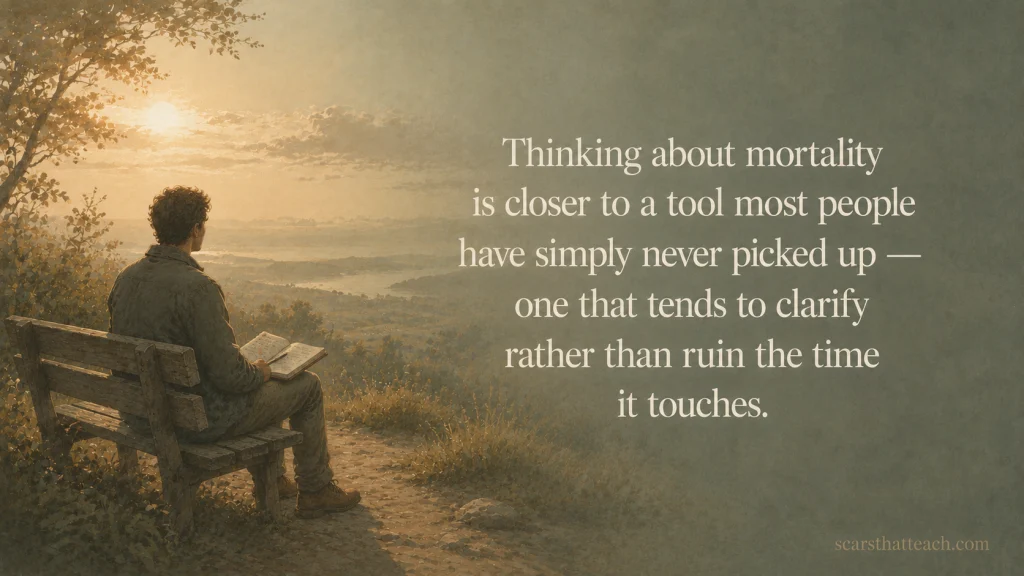
If fear of your own death has reached the point where it is steadily interfering with ordinary daily life, that has moved past what reflection alone tends to resolve, and a conversation with a professional who can look at your specific situation is worth considering. For most people, though, thinking about mortality is not a crisis to manage. It is closer to a tool most people have simply never picked up, one that tends to clarify rather than ruin the time it touches. For a wider collection of reflections on what living well actually requires, the broader collection of life lessons drawn from these years covers related ground from other angles.
FAQs
🌫️ Is it normal to think about your own death often?
Yes. Occasional thoughts about mortality are a normal part of being human, and research suggests they can prompt more deliberate living rather than only fear, depending on how they are engaged with.
🛡️ Why do most people avoid thinking about death entirely?
Research on terror management theory suggests humans manage the anxiety mortality creates through beliefs, self-esteem, and pursuits that feel like they will outlast a single lifetime, which makes avoidance the easier default.
🔍 Can thinking about death actually be good for you?
Under certain conditions, research has linked mortality awareness to healthier behavior, more meaningful relationships, and clearer priorities, alongside the more commonly discussed defensive reactions.
🛏️ What do people actually think about near the end of life?
Far more often than expected, the people closest to them and whatever was left unsaid, rather than achievements or possessions, which tend to matter less the closer someone gets to the end.
🚨 When does fear of death need professional attention?
When it consistently interferes with daily functioning rather than surfacing occasionally, that has moved beyond what reflection alone resolves, and speaking with a mental health professional is worth considering.